
Itchy Feet? Fungus Isn’t the Only Suspect
Fungus may be the first thing that comes to mind when your feet start itching, but it isn’t the only possibility. From eczema and contact dermatitis to bacterial infections, several conditions can leave feet itchy, peeling, or irritated.
 Written byTelederm Clinical Team, MD | RPh | PharmD | FAADDermatology & Clinical Content Team
An itchy, peeling foot has a way of making athlete’s foot seem like the obvious diagnosis. Pick up an antifungal cream, give it a few days, and problem solved. Except sometimes the itching sticks around, the peeling comes back, or the rash never quite behaves the way athlete’s foot is supposed to.
That’s because fungus is only one possible explanation for an itchy foot. Eczema can affect the feet, reactions to materials in shoes can cause contact dermatitis, psoriasis can create scaling that resembles a fungal infection, and even certain bacterial infections can change the appearance of your feet and toes. To make things more complicated, several of these conditions can cause overlapping symptoms, which means redness, peeling, itching, or burning alone may not tell the whole story.
The differences often become easier to spot when you look beyond the itch itself. Where is the irritation located? Are there tiny blisters, cracks, pits, or thick areas of scale? Is there an unusual odor? Does the rash seem to follow the shape of a shoe, or does it concentrate between the toes?
Those details can provide useful clues, although they aren’t a substitute for an actual diagnosis. So rather than treating every itchy foot like a fungal infection, it helps to know a few of the other conditions that can look surprisingly similar.
When It Really Is Athlete’s Foot
Athlete’s foot, also known as tinea pedis, is a fungal infection. It often causes itching, burning, or stinging between the toes or on the soles, along with dry, scaly, peeling, or cracked skin. The skin between the toes can sometimes become soft and whitish, while other cases spread across the bottom or sides of the feet. Blisters can occur too.
That range of appearances is part of what makes athlete’s foot tricky. It doesn’t always look like the stereotypical peeling rash between two toes. A dry, scaly sole can also be fungal, which makes it easy to mistake for ordinary dry skin or another inflammatory skin condition.
Moist environments tend to favor fungal growth, so sweaty feet, damp socks, locker rooms, communal showers, and shoes that keep feet warm and enclosed can all create favorable conditions for athlete’s foot.
When Tiny Blisters Point Somewhere Else
If the itch seems almost impossible to ignore and tiny blisters begin appearing along the feet or toes, dyshidrotic eczema may be another possibility.
This type of eczema causes small, intensely itchy blisters on the hands, feet, or both. The blisters can persist for several weeks before clearing, and once they settle, the skin may be left dry, irritated, or peeling.
That sequence matters. Someone who notices the peeling stage but missed the tiny blisters that came before it could easily assume fungus is responsible. Looking back at how the rash started can therefore be just as informative as looking at what the skin happens to look like today.
Dyshidrotic eczema also isn’t contagious. Athlete’s foot, on the other hand, is an infection that can spread. Two itchy feet can look similar in the mirror while having very different explanations.
Sometimes Your Shoes Are the Problem
Feet spend hours surrounded by materials that most other parts of the body rarely encounter for quite so long. Leather, rubber, plastic, fabrics, dyes, metals, and adhesives can all be found in footwear, and any of them can potentially become a problem for someone who develops contact dermatitis. Even socks, foot creams, powders, deodorants, or other products applied to the feet can sometimes be responsible.
There’s even a name for this: footwear dermatitis.
Unlike the classic between-the-toes pattern people often associate with athlete’s foot, contact dermatitis from footwear may appear on the tops of the feet or in areas that correspond with the material causing the reaction. The skin may itch, become irritated, or develop a rash.
The Bacterial One: Pitted Keratolysis
Not every foot infection is fungal.
Pitted keratolysis is a superficial bacterial infection that typically affects pressure-bearing areas of the soles, particularly the heels and balls of the feet. Instead of the typical scaling associated with athlete’s foot, the skin develops clusters of small, crater-like pits. One of its other distinctive features is often a noticeable foot odor.
Interestingly, itching isn't always the main complaint. Some people have no symptoms at all, while others can experience itching or discomfort when walking. Sweaty feet and prolonged use of enclosed footwear can create the warm, moist conditions in which the bacteria thrive.
So if the biggest clues are tiny pits + sweaty feet + an unusual odor, that paints a different picture from a straightforward fungal infection.
And it matters because an antifungal product is designed to treat fungus, not bacteria.
Psoriasis Can Show Up on the Feet, Too
Psoriasis isn't usually the first thing that comes to mind when someone develops an itchy, scaly foot, but it belongs in the conversation.
Psoriasis can cause dry, thick, raised, scaly patches that may itch, and certain forms can involve the hands and feet. When scaling is concentrated on the soles, the appearance can overlap with other conditions enough that trying to identify it from “dry and itchy” alone becomes difficult.
Other clues elsewhere on the body may help provide context. A dermatologist isn't necessarily looking only at the patch that bothers you most; the overall pattern of what is happening with your skin and nails can sometimes help clarify what is going on.
Location Can Give You Clues, But It Doesn't Give You a Diagnosis
This is where itchy feet become a bit of a dermatology puzzle.
A rash concentrated between the toes may make athlete’s foot more suspicious. Tiny, intensely itchy blisters can point toward dyshidrotic eczema. A rash across areas touched by footwear may raise the possibility of contact dermatitis. Small pits concentrated on the heel or ball of the foot, particularly when accompanied by strong odor, fit better with pitted keratolysis.
But skin conditions don't always follow their most recognizable textbook pattern, and symptoms can overlap. That's why location is useful as a clue rather than a home diagnostic test.
It also explains why buying one treatment after another can become frustrating. If the original assumption is wrong, changing brands of the same type of product may not solve the problem.
What About Toenail Fungus?
The skin isn't the only place fungus can settle in.
Toenail fungus can cause changes such as discoloration, thickening, debris beneath the nail, and lifting of the nail from the nail bed. Athlete’s foot and fungal nail infections can also occur together, particularly when athlete’s foot has been present for a long time.
The important distinction is that an itchy foot and an abnormal-looking toenail aren't necessarily one single problem. A dermatologist may need to consider what is happening with the skin, the nails, or both.
That becomes especially important before committing to a treatment plan, because conditions affecting the skin and conditions affecting the nail can require different approaches.
When It’s Time to Stop Guessing
An occasional itch after wearing sweaty shoes isn't necessarily a reason for alarm. A rash that keeps returning, spreads, becomes painful, produces blisters, affects the nails, or simply refuses to improve is a different situation.
The same is true if you've repeatedly treated what you assumed was athlete’s foot without much success.
At that point, the more useful question may not be “Which antifungal should I try next?” but “Is this actually fungus?”
Dermatologists can often identify patterns from the appearance, distribution, and history of a rash. When the diagnosis isn't clear, additional testing may sometimes be used.
How Telederm Can Help
When itching, peeling, scaling, blisters, or changes to the toenails aren't improving, Telederm makes it possible to have the concern reviewed by a board-certified dermatologist online.
Your provider can review photos along with your symptoms, health history, previous treatments, and how the problem has changed over time. From there, they can help determine whether the pattern appears consistent with athlete’s foot, eczema, dermatitis, psoriasis, a bacterial condition, or another possible cause and discuss appropriate next steps.
Because sometimes itchy feet really are athlete’s foot.
But when they aren't, knowing what you're actually dealing with can save a lot of time spent treating the wrong thing.
Let a dermatologist take a closer look.
Share photos and symptoms with a board-certified dermatologist and get a personalized plan for your skin concern.
This article is for informational purposes only and does not constitute medical advice. Individual results vary. Treatment decisions should be made in consultation with a licensed healthcare provider. Compounded medications are not FDA-approved.
Telederm Clinical Team, MD | RPh | PharmD | FAAD
Dermatology & Clinical Content Team · Telederm.me
Keep reading.
All in Skin Conditions →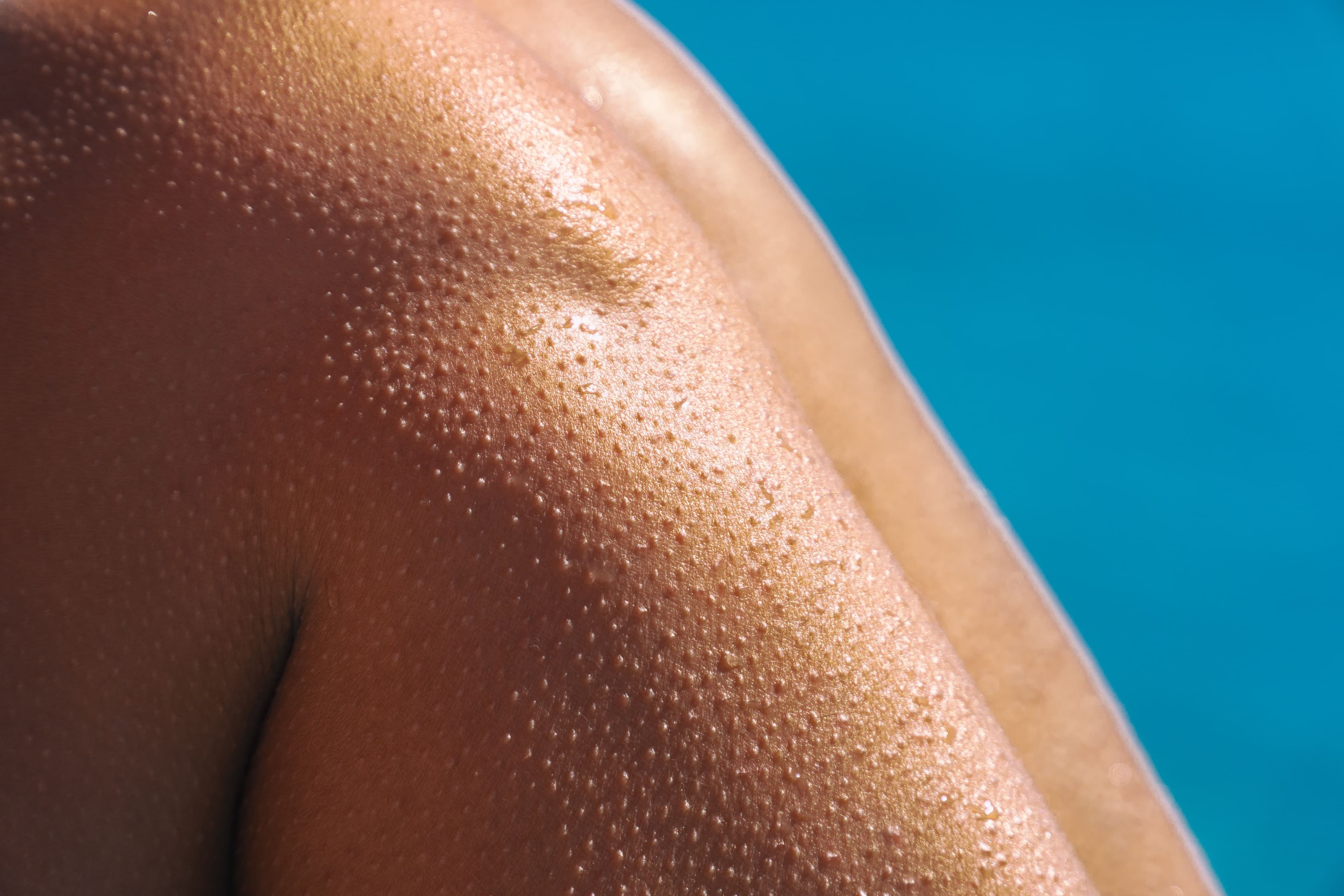
Keratosis Pilaris Explained: Why Those Rough Bumps Appear
Tiny rough bumps on the arms, thighs, or cheeks are often caused by keratosis pilaris, a common skin condition sometimes called "chicken skin" or "strawberry skin." Learn what may contribute to these bumps and why they're often mistaken for other skin concerns.
Telederm Clinical Team · Aug 13, 2026
A GLP-1 Can Change More Than the Number on the Scale
Significant weight loss can bring changes beyond the number on the scale. Learn about common skin and hair changes—including hair shedding, dry skin, and changes in facial appearance—and discover simple ways to support healthy-looking skin throughout your weight-loss journey.
Telederm Clinical Team · Aug 4, 2026
The Dermatologist's Overnight Hand Repair Method
Give dry, rough hands an overnight reset with a simple soak, moisturize, and cotton glove routine designed to help lock in hydration.
Dandruff vs Seborrheic Dermatitis: Key Differences
Dandruff and seborrheic dermatitis can cause similar symptoms, but they aren't exactly the same. Learn the key differences, common causes, and when professional support may help.