
Can Hair Dye Cause Hair Loss? How to Prevent Damage
Is your latest hair color responsible for thinning or breakage? Bleaching and coloring can weaken hair strands, but that doesn't always mean you're losing hair from the root. Learn how chemical treatments affect your hair and scalp, how to reduce damage, and what to know if you're using topical hair-growth medications.
 Written byTelederm Clinical Team, MD | RPh | PharmD | FAAD: Madison M.Dermatology & Clinical Content Team
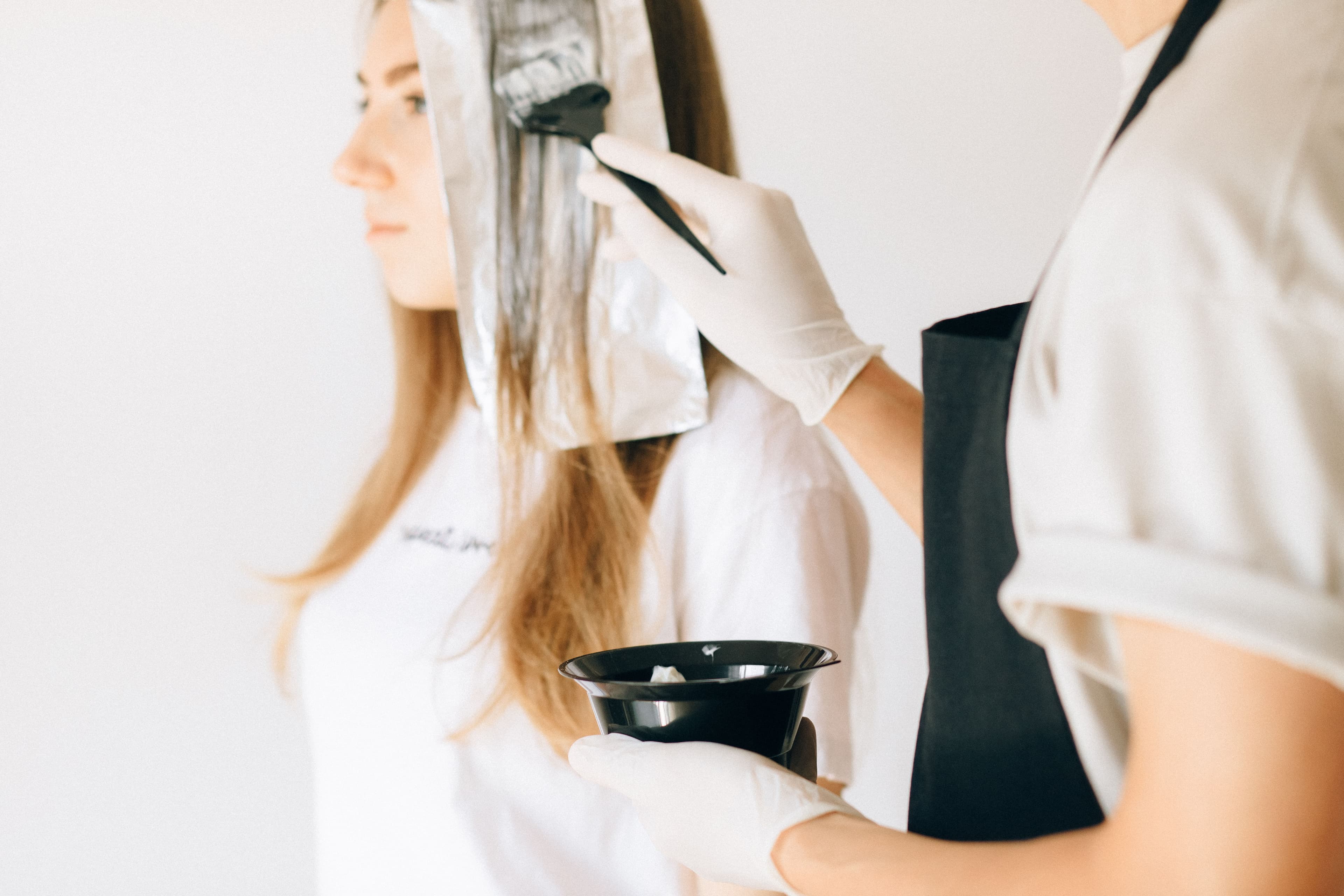
There's something exciting about leaving the salon with a fresh color. Whether it's a few subtle highlights, a dramatic new shade, or a full blonde transformation, changing your hair color can feel like an instant refresh.
But what happens when your hair starts feeling thinner, your ends seem to disappear, or you're suddenly noticing more strands in your brush?
It's natural to wonder whether your latest color appointment could be responsible.
The answer isn't always straightforward. Bleaching and coloring can damage hair, but that damage doesn't necessarily mean you're losing hair from the root. Understanding what happens to your strands, scalp, and hair follicles can help you recognize the difference.
What Actually Happens When You Bleach Your Hair?
Bleaching does more than change your hair color.
To lighten hair, bleaching products use chemicals that penetrate the hair shaft and break down melanin, the pigment responsible for your natural color.
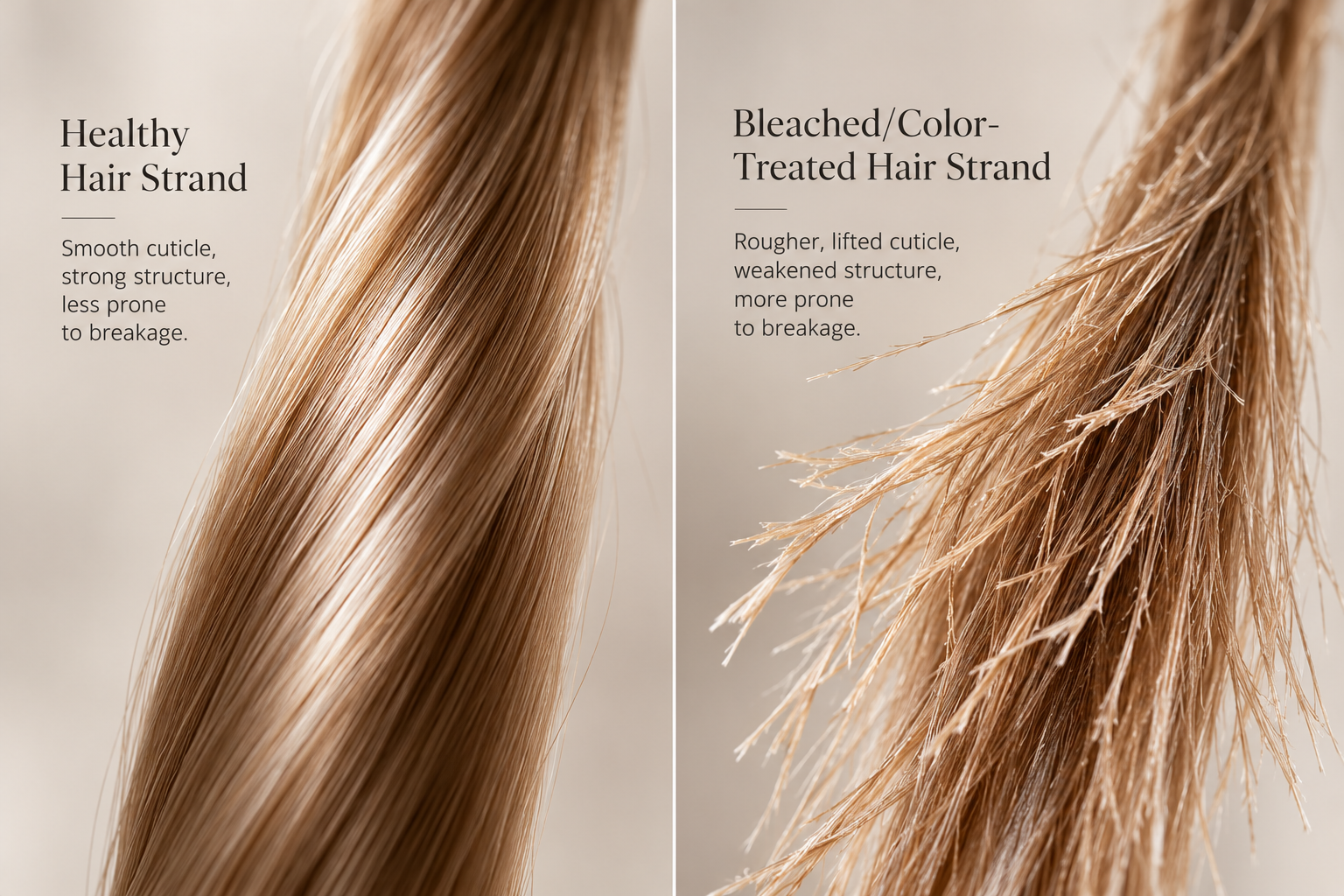
In the process, bleaching can also damage the hair's protective outer layer, called the cuticle, and weaken proteins that help give each strand its strength and structure.
The result? Hair may become drier, rougher, more porous, and easier to break.
The more aggressively hair is lightened, the greater the potential for damage. Repeated bleaching, particularly when applied over previously lightened sections, can further weaken the strands.
This doesn't mean everyone who bleaches their hair will experience significant damage. The outcome depends on several factors, including the starting condition of the hair, the products used, and how the bleaching process is performed.
But there's an important distinction: damaging the hair shaft isn't the same as damaging the hair follicle.
Hair Breakage vs. Hair Loss: Why the Difference Matters
If you've noticed shorter pieces around your face, uneven ends, or hair that seems to be getting thinner after coloring, you might assume you're experiencing hair loss.
But it could actually be breakage.
Hair breakage happens when the strand snaps somewhere along its length. Chemical processing can weaken the hair enough that ordinary brushing, styling, or friction causes pieces to break off.
Hair shedding, on the other hand, involves hairs being released from their follicles as part of the hair-growth cycle. Shedding is normal to a degree, although excessive shedding can occur for various reasons.
True hair loss may involve increased shedding, changes in the growth cycle, or damage to the follicle itself.
Your hair can continue growing normally at the scalp even while the ends are breaking off.
If you're losing length as quickly as new growth appears, it may seem like your hair has stopped growing altogether.
That frustrating feeling of never being able to grow your hair past a certain length? Breakage could be part of the explanation.
Can Hair Dye or Bleach Damage Your Scalp?
Yes, and this is where coloring-related concerns can go beyond the hair shaft.
Bleaching products and certain permanent hair dyes contain chemicals that may irritate the skin. Some people experience itching, redness, dryness, or burning after a coloring treatment.
Hair dye can also trigger allergic contact dermatitis, a reaction to an ingredient in the product. One well-known potential allergen is para-phenylenediamine (PPD), which is found in some permanent hair dyes.
An allergic reaction may cause itching, redness, swelling, or blistering around the scalp, hairline, ears, or face. Reactions can sometimes develop even after someone has used hair dye without problems in the past.
Irritation doesn't automatically mean the follicles have been damaged. However, significant scalp inflammation deserves attention, particularly if it's accompanied by noticeable shedding or changes in hair density.
Severe pain, blistering, or open sores after a chemical treatment should never be dismissed as a normal part of coloring.
Can Bleaching Actually Damage Hair Follicles?
In most circumstances, the damage associated with bleaching affects the hair shaft rather than the follicle beneath the skin.
Your hair follicles are living structures located within the scalp. They're responsible for producing new hair, while the visible strands extending beyond the skin are made primarily of nonliving keratinized cells.
Because bleaching acts mainly on the exposed hair, ordinary shaft damage doesn't necessarily interfere with the follicle's ability to produce new growth.
However, severe chemical burns can injure the scalp deeply enough to damage follicular structures.
In rare documented cases, serious burns associated with hair-lightening treatments have resulted in scarring alopecia, a form of permanent hair loss caused by destruction of the follicles.
These cases are uncommon and shouldn't be confused with the dryness or breakage that can follow routine coloring.
Still, they highlight why intense burning, persistent pain, blistering, or sores during or after a chemical treatment require prompt medical attention.
Is Coloring Your Hair Less Damaging Than Bleaching It?
Not all hair-coloring methods affect the hair in the same way.
Temporary color products generally coat the outside of the hair and wash away more easily. Semi-permanent products may deposit color without requiring the same degree of chemical lightening.
Permanent dyes typically involve chemical processes that change the hair's natural pigmentation, while bleaching is specifically designed to remove pigment.
Going substantially lighter often requires stronger chemical processing than going darker.
That doesn't mean dark hair dye is automatically harmless. Permanent dyes can still damage the hair shaft or trigger scalp reactions, even when they aren't being used to create a lighter shade.
The American Academy of Dermatology recommends staying within approximately three shades of your natural hair color when possible, since more dramatic lightening generally requires stronger peroxide concentrations and can cause greater damage.
Can You Color or Bleach Your Hair While Using Hair-Growth Medication?
If you're using a topical hair-growth treatment, you might wonder whether you need to give up your regular coloring appointments.
Not necessarily.
For example, certain commercially available topical minoxidil products provide instructions for patients who want to color, perm, or chemically treat their hair.
Those instructions recommend washing the minoxidil off the hair and scalp before chemical treatment, avoiding application on the day of coloring, and waiting at least 24 hours afterward before resuming use, provided no scalp irritation has developed.
These precautions are intended to reduce the possibility of irritation, not because hair coloring has been shown to cancel out minoxidil's hair-growth effects.
However, these instructions aren't universal.
Prescription scalp treatments and compounded hair-growth medications may contain different active ingredients, concentrations, or formulation bases. A compounded preparation containing minoxidil, finasteride, or multiple ingredients may have different considerations from a commercially manufactured minoxidil solution.
If you're planning a coloring or bleaching appointment while using a prescription scalp treatment, ask your pharmacist or dermatologist whether you should adjust your application schedule.
And if your scalp becomes irritated, burned, or inflamed after coloring, don't apply topical medication to the affected area until you've received appropriate guidance.
How Can You Reduce Damage Without Giving Up Hair Color?
You don't necessarily have to choose between colored hair and healthy-looking hair. A few thoughtful precautions can help reduce avoidable damage.
Be realistic about how much you lighten your hair. Dramatic color changes often require more intensive processing. Choosing a shade closer to your natural color can help limit chemical damage.
Avoid repeatedly bleaching already-lightened sections. Overlapping chemical treatments can further weaken hair that's already been processed.
Give your hair time between appointments. Frequent coloring and chemical treatments can add to existing damage. Spacing out touch-ups gives you an opportunity to assess your hair's condition before processing it again.
Condition regularly and detangle gently. Conditioning products can reduce friction and make hair easier to manage. Use a wide-tooth comb when appropriate for your hair type, and avoid pulling aggressively through knots.
Trim damaged ends regularly. Split ends can continue to travel up the hair shaft, contributing to further breakage. Regular trims help remove damaged ends, prevent splits from worsening, and maintain healthier-looking hair as it grows.
Limit unnecessary heat exposure. Frequent blow-drying, straightening, and curling can further weaken chemically processed hair. When possible, reduce the frequency of heat styling and use lower temperatures.
Protect your hair from excessive sun exposure. UV exposure can contribute to dryness, brittleness, and fading, particularly in color-treated hair. A wide-brimmed hat can help protect your strands when spending time outdoors.
Pay attention to your scalp. Never assume significant burning or discomfort is normal. If a chemical product causes intense stinging or pain, it should be rinsed away promptly according to the product's safety instructions.
Follow hair dye safety directions. The FDA recommends performing the manufacturer's recommended skin allergy test before each use, following the product's processing time, and avoiding coloring when the scalp is irritated or damaged.
Know when it's time to seek advice. Persistent scalp irritation, patchy hair loss, unusually heavy shedding, or areas where hair no longer seems to grow deserve professional evaluation.
Your Hair Can Be Growing Even When It Doesn't Look Like It
Bleaching and coloring can change more than your hair's appearance, but the effects aren't all the same.
Often, what looks like thinning or stalled growth is actually the result of weakened strands breaking before they can retain length. In other situations, scalp irritation or an allergic reaction may contribute to symptoms that deserve a closer look.
Severe follicle damage is possible, but it's an uncommon complication rather than an expected consequence of coloring your hair.
Understanding those differences can help you make more informed choices about coloring, protecting your hair, and recognizing when something isn't right.
And if you're already using a hair-growth treatment, coordinating your coloring routine with your pharmacist or dermatologist can help you care for your scalp without unnecessarily complicating your treatment plan.
Telederm Clinical Team, MD | RPh | PharmD | FAAD
Dermatology & Clinical Content Team · Telederm.me
Keep reading.
All in Hair →
Oral vs. Topical Minoxidil & Finasteride
Oral and topical minoxidil and finasteride are commonly used to treat hair loss, but their side effects aren't identical. From scalp irritation and unwanted hair growth to cardiovascular concerns and sexual side effects, learn how these treatments compare, what men and women should know, and why the formulation matters.
Telederm Clinical Team · Oct 26, 2026
The Secret to Longer Hair Might Be a Haircut
Your hair may be growing just fine, even if it never seems to get any longer. The problem could be happening at the ends. Here’s how trims, breakage, and length retention all fit together.
Telederm Clinical Team · Sep 21, 2026
Can Hair Loss Be Reversed? Understanding Your Treatment Options
Not all hair loss is permanent. Learn what affects the chances of hair regrowth, common treatment options, and why personalized treatment plans may play an important role in managing hair loss.
Telederm Clinical Team · Aug 13, 2026
Hair Shedding vs Hair Loss: What's the Difference?
Noticing more hair in your brush or shower drain? Learn the differences between hair shedding and hair loss, common causes, and signs that may help you better understand what's happening.