
The Secret to Longer Hair Might Be a Haircut
Your hair may be growing just fine, even if it never seems to get any longer. The problem could be happening at the ends. Here’s how trims, breakage, and length retention all fit together.
 Written byTelederm Clinical Team, MD | RPh | PharmD | FAADDermatology & Clinical Content Team
You cut your hair because you want it to get longer.
It sounds completely backwards. And technically, a haircut can't make the hair growing from your scalp move any faster. But that doesn't mean regular trims have nothing to do with reaching your length goals.
Growing longer hair isn't only about how quickly new hair grows. It's also about how much of that length you manage to keep.
If the ends are splitting and breaking faster than you're gaining length at the scalp, your hair can seem stuck at the same length for months. That's where a trim can actually make a difference.
Hair Growth and Hair Length Aren't Quite the Same Thing
Hair growth happens beneath the surface of the scalp, inside the hair follicle. Cutting the ends of your hair doesn't send a signal back to the follicle telling it to speed things up.
So, no, taking an inch off the bottom doesn't suddenly make an inch grow faster from the top.
But there's another side to the equation: length retention.
Once hair emerges from the scalp, the visible strand is exposed to everything you do to it. Washing, brushing, heat styling, coloring, bleaching, chemical treatments, tight hairstyles, sun exposure, and everyday friction can all take a toll over time. Research on the hair shaft shows that chemical, thermal, and mechanical damage can contribute to weakening and breakage.
The longer your hair gets, the longer its ends have been exposed to that wear and tear.
That means someone can have perfectly normal growth at the scalp while struggling to gain visible length.
The Problem May Be at the Bottom, Not the Top
Think about someone whose hair is steadily growing but whose ends are dry, splitting, and snapping.
New length is being added at the scalp. At the same time, length is being lost at the ends.
The result?
It may look like the hair isn't growing at all.
Split ends are particularly troublesome because damage at the end of a hair fiber can progress farther along the strand. Trimming removes those damaged ends before more length is lost to breakage.
So while the scissors aren't making the follicle work faster, a strategic trim may help you keep more of the hair you're already growing.
That's an important distinction.
So, Can Cutting Your Hair Make It “Grow” Faster?
Biologically? No.
Practically? It can sometimes make it seem that way.
Suppose your hair grows steadily for several months, but damaged ends continually snap off. You may see very little change in overall length.
Now suppose you trim the badly damaged ends and start taking better care of the remaining hair. The growth rate at the scalp hasn't changed, but less hair is breaking off.
Over the following months, you may finally begin seeing the length you've been waiting for.
That's why someone can genuinely feel that their hair “started growing” after getting regular trims, even though what really improved was length retention.
But the Haircut Is Only Half of the Story
There's an important catch.
Cutting off damaged ends and then continuing the same habits that damaged them in the first place doesn't solve much.
Hair can be damaged by repeated or excessive heat, aggressive brushing and combing, certain styling practices, and chemical processing. Tight hairstyles can also create repeated tension and contribute to breakage and, in some cases, traction alopecia.
So if longer hair is the goal, what happens between haircuts matters just as much as the haircut itself.
That doesn't mean giving up your blow dryer, highlights, ponytail, or favorite styling products forever. Hair care doesn't have to become another full-time job.
It means paying attention to what your hair can tolerate.
Using conditioner, being gentler while detangling, limiting excessive heat, reducing unnecessary chemical damage, and avoiding constant tension can all help protect fragile hair. The American Academy of Dermatology specifically recommends conditioning to help reduce breakage and split ends.
Healthy-looking length is ultimately a balance between growing hair and protecting the hair you've already grown.

Do You Really Need a Trim Every Six Weeks?
Not necessarily.
The idea that everyone needs a haircut on exactly the same schedule is a little too neat for something as individual as hair.
Someone with short, heavily styled or chemically processed hair may notice damaged ends sooner. Someone with relatively healthy, minimally processed hair may be able to go considerably longer.
Hair texture, styling habits, chemical treatments, heat exposure, desired hairstyle, and the condition of the ends can all influence how often a trim makes sense.
Rather than watching the calendar, pay attention to the hair itself.
Ends that are visibly splitting, repeatedly tangling, snapping, feeling unusually rough, or becoming noticeably thinner than the hair above them may be telling you more than the number of weeks since your last appointment.
And there's no benefit to repeatedly cutting off healthy length simply because a certain number of weeks has passed.
The goal is removing damage, not racing your new growth with a pair of scissors.
Breakage or Hair Loss? There's a Difference
Here's where things get especially important.
Hair that won't seem to get longer isn't always a hair-care problem.
Breakage happens along the hair shaft. The strand snaps somewhere between the scalp and the end.
Shedding happens when the entire hair is released from the follicle as part of the hair cycle.
Hair loss can involve changes in how much hair is being shed, how well hair is being replaced, or how follicles are producing hair. Illness, hormonal changes, stress, aging, inherited conditions, and other factors can affect the hair growth cycle.
These problems can look similar from a distance.
A growing collection of short broken pieces around the sink may point toward breakage. A widening part, receding hairline, visible thinning, bald patches, or a noticeable increase in shedding deserves a different kind of attention.
A haircut can clean up damaged ends.
It can't diagnose or treat what's happening inside a hair follicle.
When the Scissors Aren't the Answer
If your ends are healthy but you're noticing progressively thinner hair, significant shedding, a changing hairline, or areas where the scalp is becoming more visible, another trim probably isn't going to answer the bigger question:
Why is this happening?
There are many different types and causes of hair loss, and they don't all respond to the same treatment. That's why figuring out what's actually happening matters before jumping from one hair-growth product to another.
Sometimes the problem really is breakage and hair-care practices.
Sometimes it's shedding.
Sometimes it's a form of hair loss.
And sometimes more than one of those things is happening at the same time.
How Telederm Can Help
If your concern goes beyond split ends and you're noticing unusual shedding, thinning, changes in your hairline, or other signs of hair loss, Telederm can connect you with a board-certified dermatologist online.
Your dermatologist can review your photos, health history, symptoms, previous treatments, and the pattern of your hair concerns to help determine what may be happening.
When treatment is appropriate, your provider can discuss options based on the type of hair loss and your individual needs.
Because sometimes the answer is a haircut.
And sometimes the answer starts much closer to the root.
Telederm Clinical Team, MD | RPh | PharmD | FAAD
Dermatology & Clinical Content Team · Telederm.me
Keep reading.
All in Hair →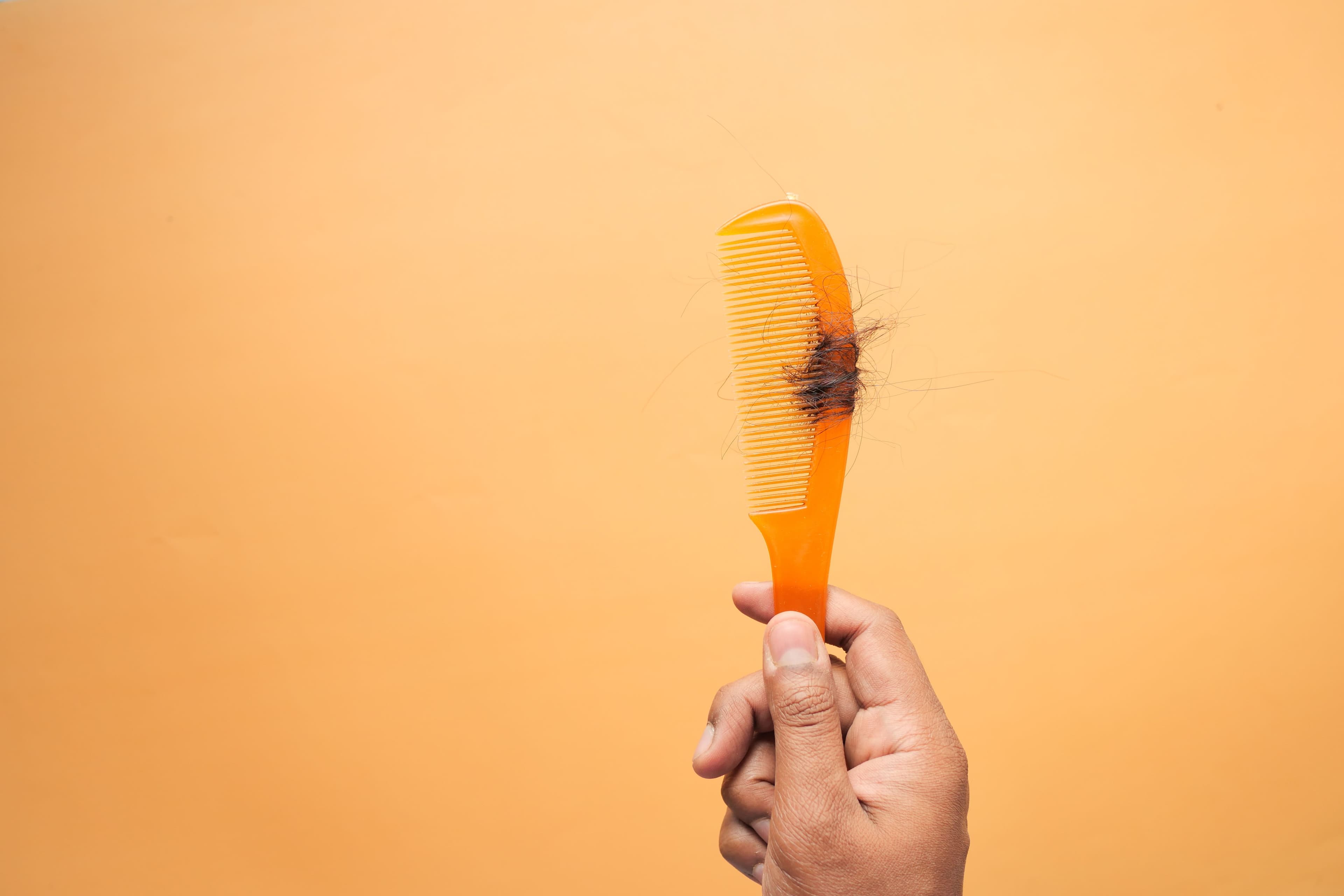
Hair Shedding vs Hair Loss: What's the Difference?
Noticing more hair in your brush or shower drain? Learn the differences between hair shedding and hair loss, common causes, and signs that may help you better understand what's happening.

A GLP-1 Can Change More Than the Number on the Scale
Significant weight loss can bring changes beyond the number on the scale. Learn about common skin and hair changes—including hair shedding, dry skin, and changes in facial appearance—and discover simple ways to support healthy-looking skin throughout your weight-loss journey.
Telederm Clinical Team · Aug 4, 2026
Can Hair Loss Be Reversed? Understanding Your Treatment Options
Not all hair loss is permanent. Learn what affects the chances of hair regrowth, common treatment options, and why personalized treatment plans may play an important role in managing hair loss.
Telederm Clinical Team · Aug 13, 2026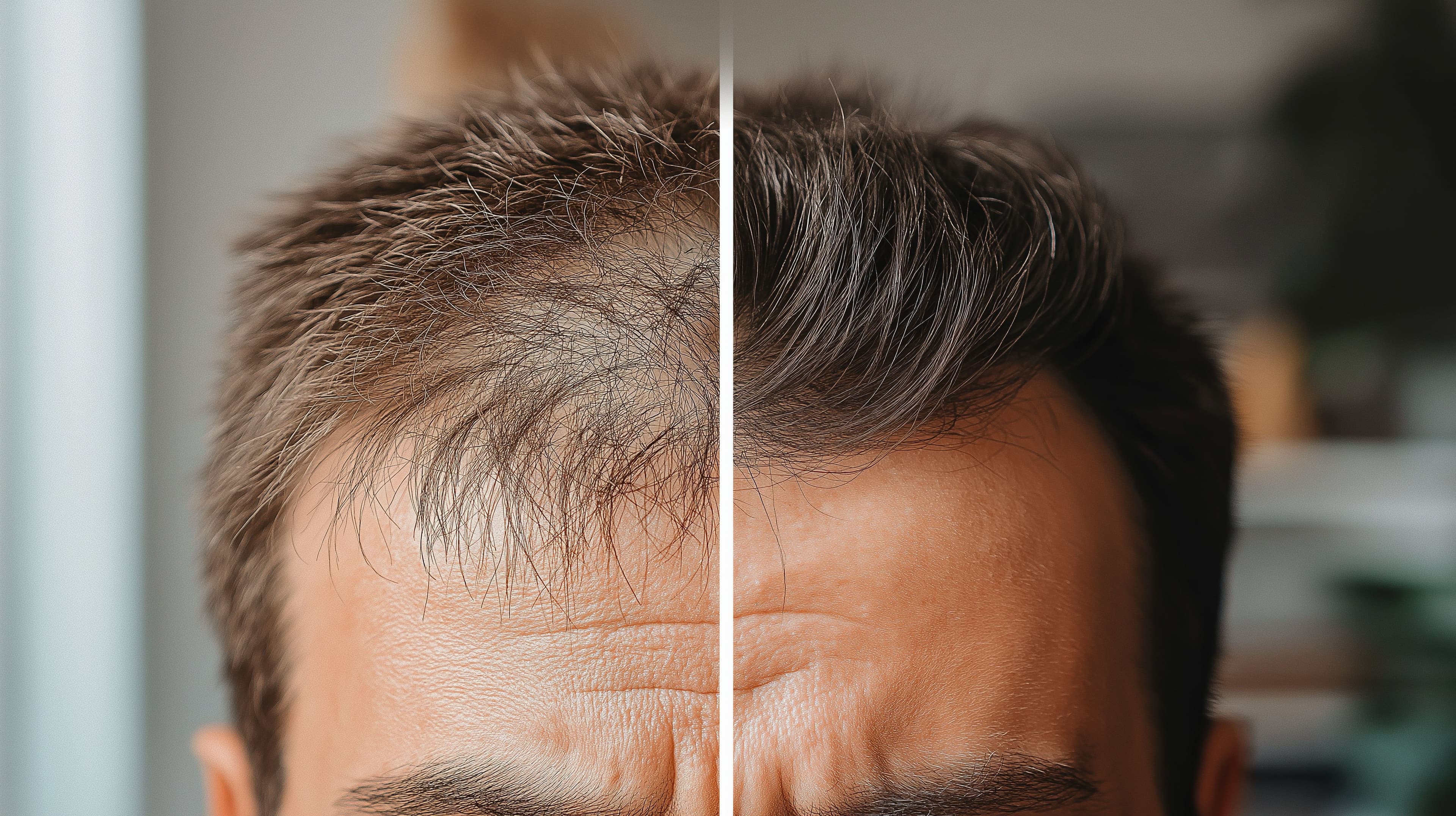
Does Minoxidil Have to Be Forever?
If you've been avoiding minoxidil because you don't want to be on it forever, the answer may be more nuanced than you think. Here's what a board-certified dermatologist actually says about long-term use.