
Can Hair Loss Be Reversed? Understanding Your Treatment Options
Not all hair loss is permanent. Learn what affects the chances of hair regrowth, common treatment options, and why personalized treatment plans may play an important role in managing hair loss.
 Written byTelederm Clinical Team, MD | RPh | PharmD | FAADDermatology & Clinical Content Team
Can Hair Loss Really Be Reversed?
Few changes in appearance feel as personal as hair loss. Whether you've recently noticed thinning or have watched it develop gradually over time, one question is usually at the top of your mind: can this be reversed?
The honest answer: it depends on the cause. Some hair loss is temporary and resolves on its own. Other types progress steadily without treatment. Because hair loss has so many possible causes, figuring out what's driving yours is usually the first real step toward an effective plan — and it's why two people with similar-looking hair loss can end up with very different treatment recommendations.
Not All Hair Loss Is Permanent
Hair loss can happen for many different reasons, and not every type of hair loss follows the same pattern.
Some people notice increased shedding after periods of stress, illness, major life changes, or other physical changes. In these situations, the shedding may be temporary and can improve over time.
Hormonal changes can also affect how hair grows and sheds. Pregnancy, menopause, thyroid changes, and other shifts in the body may all influence hair density or shedding patterns.
Other types of hair loss tend to happen more gradually. For example, some people notice changes around the temples, crown, or part line that become more noticeable over time. These patterns can look different from person to person and may have a genetic component.
Because hair loss can have several possible causes, the amount of regrowth someone experiences can vary.
A few factors that may influence what happens next include:
The possible cause of the hair loss
How long the changes have been noticeable
The overall pattern of thinning or shedding
Genetics
General health and lifestyle factors
The main takeaway is that hair loss does not always mean the same thing for everyone. Looking at the pattern, timing, and overall changes can help provide a clearer picture of what may be going on.
What Treatment Is Actually Trying to Do
Hair loss treatment isn't only about regrowing hair. Depending on the diagnosis, a dermatologist might aim to:
Slow ongoing loss
Support healthier growth
Improve density
Preserve the hair you still have
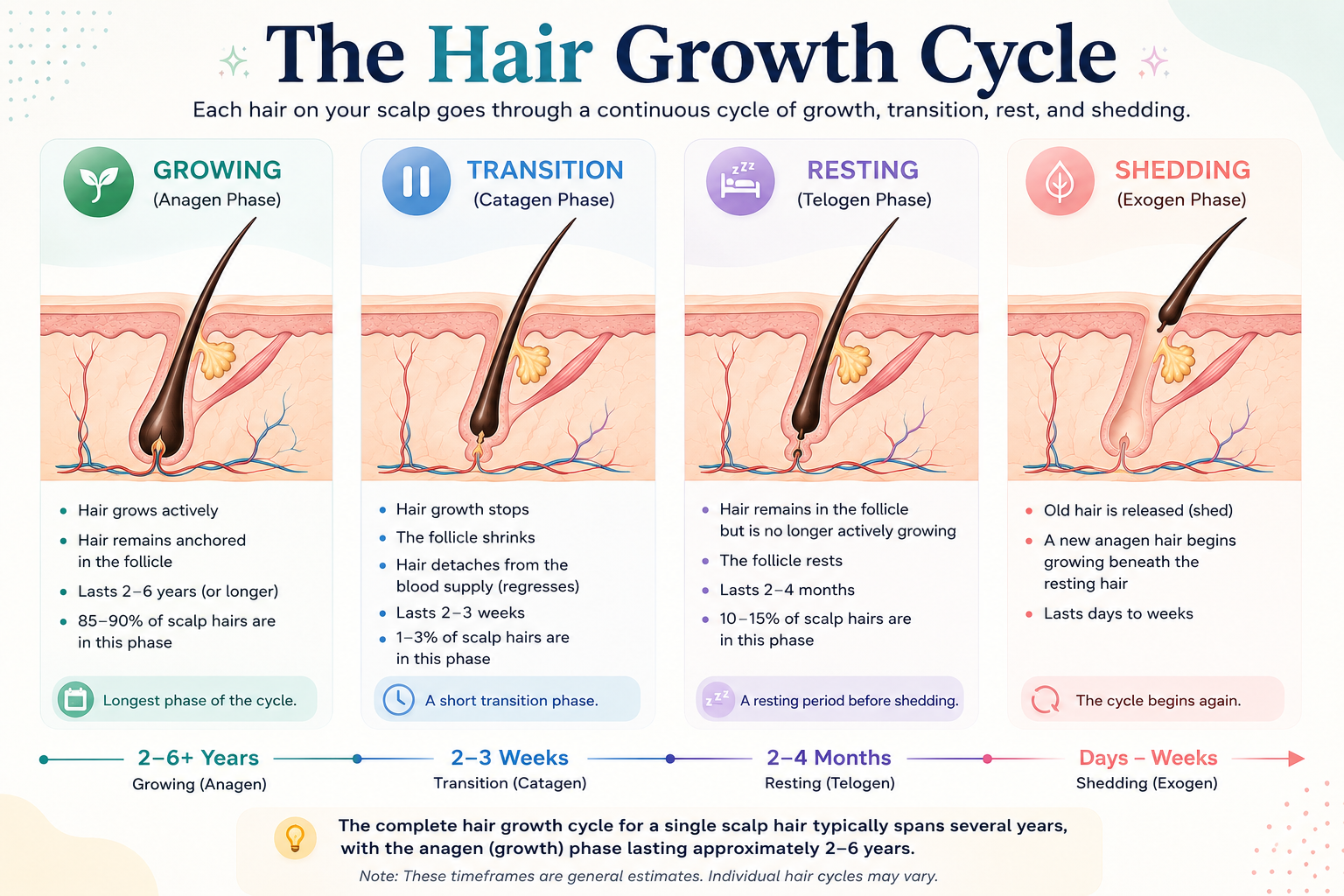
Because hair grows in cycles, results take time. Most treatment plans are built for gradual, long-term progress rather than a quick fix.
Why Treatment Isn't One-Size-Fits-All
Even people with the same diagnosis don't always want the same outcome. Some want to stop further loss. Others are focused on density or new growth. Scalp sensitivity, medical history, and personal preference all factor into what a dermatologist recommends.
This is where compounded medication often comes in. Because hair loss frequently has more than one contributing factor, a provider may prescribe a formulation that combines multiple compatible active ingredients into a single product, rather than asking a patient to juggle separate treatments on their own schedule.
Compounding can also allow more of the treatment to be tailored to the patient. Providers may be able to choose the dosage form, adjust strengths, or combine compatible ingredients based on the patient’s needs and treatment goals. It's less about a single "best" product and more about matching the formulation to the person.
Does Starting Earlier Make a Difference?
Hair loss can develop gradually, so some people may not notice meaningful thinning right away and may wait even longer before seeking an evaluation.
Every case is different, but identifying the cause earlier generally means more options are still on the table. If you've noticed increased shedding, a widening part, or a changing hairline, it may be worth seeking an evaluation sooner rather than later.
What About Treating Before Hair Loss Starts?
For people with a strong family history of pattern hair loss, it can be tempting to wait until thinning becomes obvious before thinking about treatment. However, paying attention to early changes may be worthwhile.
Hereditary hair loss often develops gradually, and the first signs can be subtle. Someone might notice a little less fullness, a widening part, changes around the hairline, or thinning near the crown before they would describe themselves as having significant hair loss. The American Academy of Dermatology notes that treatment for hereditary hair loss tends to be more effective when started early.
That doesn't mean everyone with a family history of hair loss needs to start treatment. Instead, knowing your family history and paying attention to changes over time can make it easier to recognize when it may be worth discussing your hair with a provider.
If changes do begin to appear, a provider can help determine what may be contributing to them and whether treatment makes sense.
When to Seek Evaluation
Consider getting evaluated if you notice:
Thinning that continues over time
A widening part or receding hairline
Sudden increases in shedding
Bald patches or noticeable hair loss
Hair loss that is becoming an ongoing concern
Because so many different conditions can affect hair growth, understanding what may be causing the hair loss can help guide the next steps.
How Telederm Can Help
If you're concerned about hair loss, Telederm connects you with a board-certified dermatologist. Here's what that looks like:
Tell us about your hair loss concern
Answer a few guided questions
Upload photos
Get a personalized evaluation from a provider licensed in your state
If treatment is medically appropriate, your provider will recommend a plan built around your diagnosis, history, and goals, which may include a compounded formulation tailored specifically to you.
The Bottom Line
Hair loss isn't always permanent, but it's also not always something that resolves on its own. Whether it can be slowed, stabilized, or partly regrown usually comes down to the underlying cause and how early you address it.
If you're just starting to notice thinning or you've been searching for answers for a while — understanding the "why" is the first step toward figuring out what's next.
Telederm Clinical Team, MD | RPh | PharmD | FAAD
Dermatology & Clinical Content Team · Telederm.me
Keep reading.
All in Hair →
Hair Shedding vs Hair Loss: What's the Difference?
Noticing more hair in your brush or shower drain? Learn the differences between hair shedding and hair loss, common causes, and signs that may help you better understand what's happening.
Does Minoxidil Have to Be Forever?
If you've been avoiding minoxidil because you don't want to be on it forever, the answer may be more nuanced than you think. Here's what a board-certified dermatologist actually says about long-term use.

The Secret to Longer Hair Might Be a Haircut
Your hair may be growing just fine, even if it never seems to get any longer. The problem could be happening at the ends. Here’s how trims, breakage, and length retention all fit together.
Telederm Clinical Team · Sep 21, 2026
A GLP-1 Can Change More Than the Number on the Scale
Significant weight loss can bring changes beyond the number on the scale. Learn about common skin and hair changes—including hair shedding, dry skin, and changes in facial appearance—and discover simple ways to support healthy-looking skin throughout your weight-loss journey.
Telederm Clinical Team · Aug 4, 2026