
Skin Purging vs Breakout: How to Tell the Difference
This article examines the differences between skin purging and acne breakouts, including commonly associated ingredients, expected symptom patterns, and factors dermatologists often consider during evaluation.
 Medically reviewed byKnox Beasley, MD, FAADDermatologist
Skin Purging vs Breakout: How to Tell What Your Skin Is Doing
Have you ever started using a new skincare product only to notice new blemishes appearing shortly afterward? For many people, the immediate assumption is that the product is causing a breakout or making their skin worse. However, in some situations, the explanation may be more complicated.
This is where the discussion around skin purging vs breakout often begins.
Although the two can sometimes look similar, they are not necessarily the same thing. Understanding the differences may help you better interpret changes in your skin and make more informed decisions about your skincare routine.
In this guide, we'll discuss skin purging vs breakout, including what each term means, potential triggers, key differences, and why distinguishing between the two can sometimes be challenging.
Can You Tell the Difference Between Skin Purging and a Breakout?
In some cases, certain patterns may provide clues. However, it is not always possible to distinguish between skin purging and a breakout based on appearance alone.
Factors such as product ingredients, timing, skin type, acne history, and underlying skin conditions can all influence how the skin responds. Because of this, there is no single sign that definitively confirms whether someone is experiencing purging or a breakout.
Understanding the broader context often provides more useful information than focusing on any one symptom.
What Is Skin Purging?
Skin purging is a term commonly used to describe a temporary increase in acne lesions that some people notice after introducing products known to increase skin cell turnover.
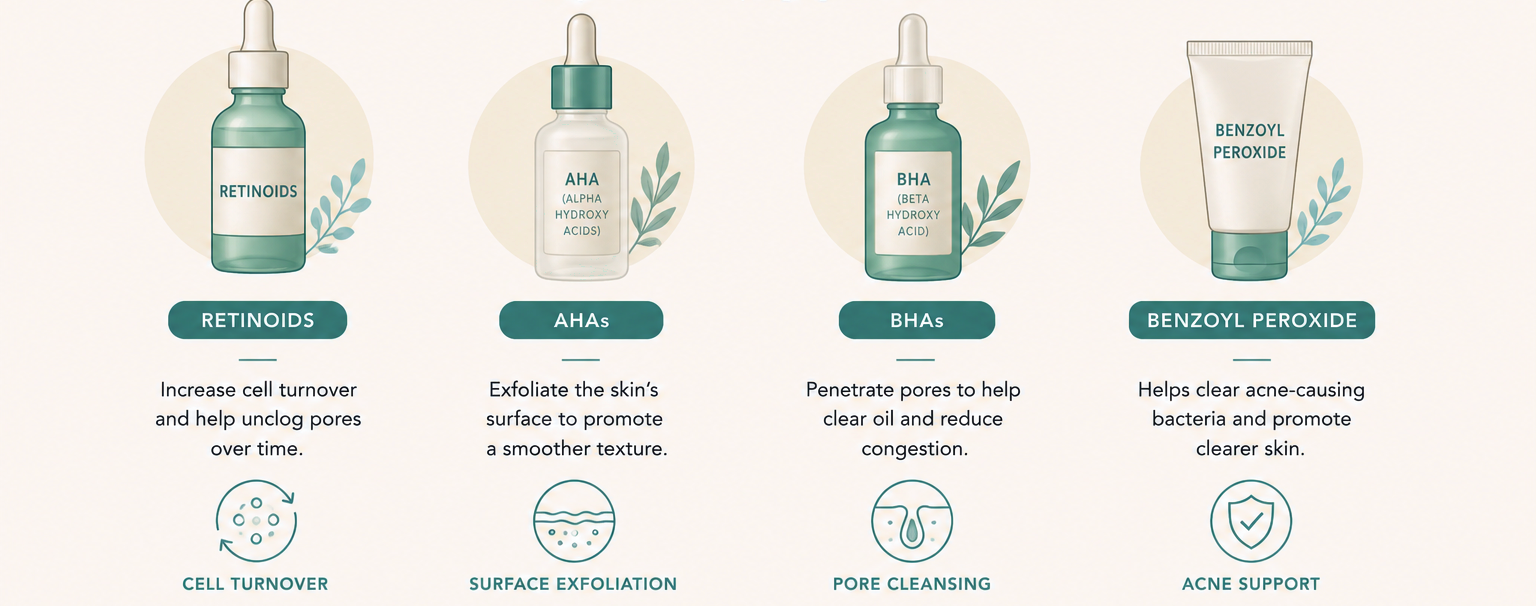
Examples of ingredients commonly associated with discussions about purging include:
Retinoids (including prescription-strength choices like tretinoin, tazarotene, and adapalene)
Alpha hydroxy acids (AHAs) (such as glycolic or lactic acid)
Beta hydroxy acids (BHAs)(such as salicylic acid)
Certain acne-focused ingredients (like benzoyl peroxide)
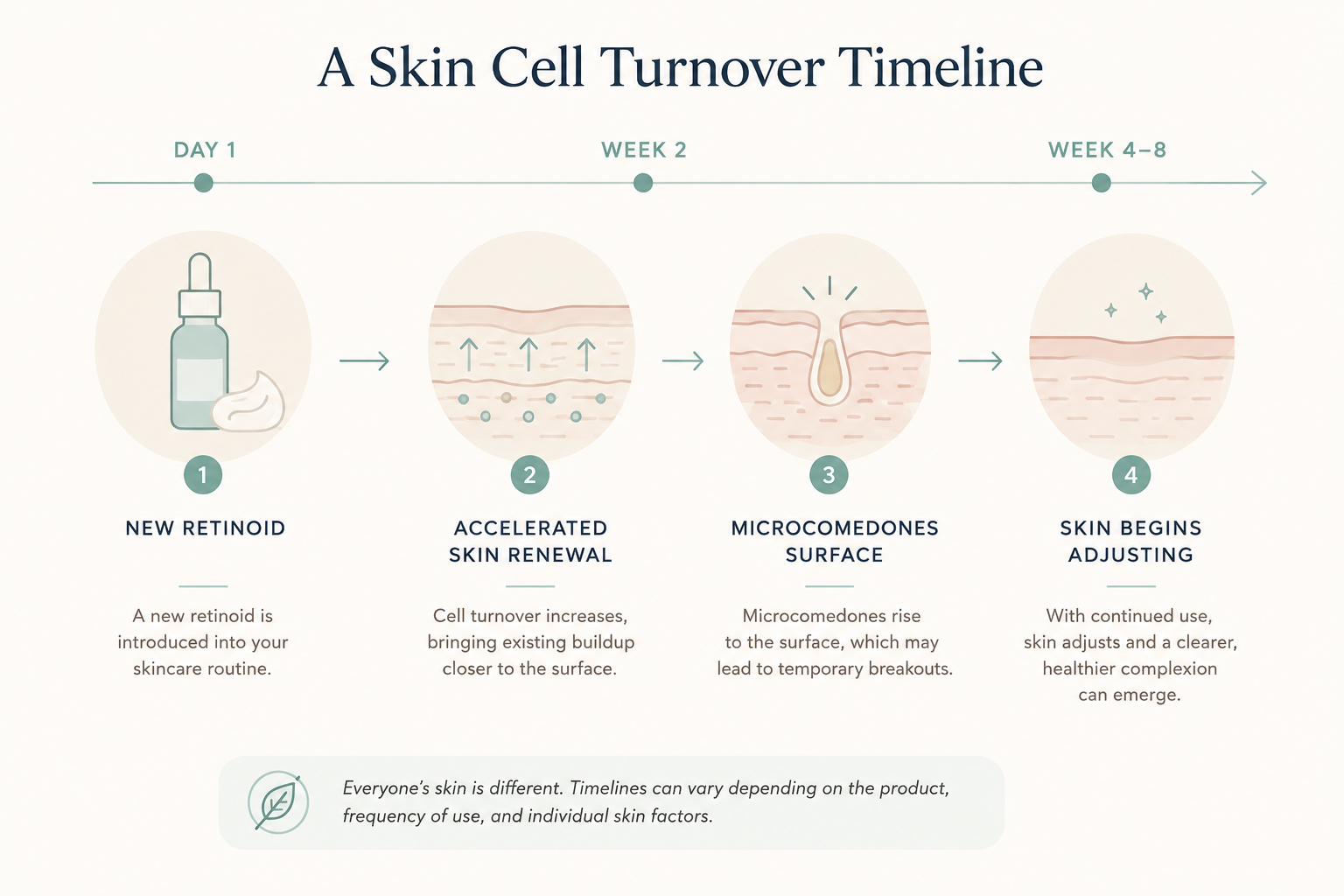
The concept of skin purging is based on the idea that these ingredients may accelerate the skin's natural renewal process.
Acne lesions do not appear instantly. Many begin as microscopic follicular blockages known as microcomedones, which are not visible to the naked eye. Some dermatology discussions suggest that ingredients that increase skin cell turnover may cause these pre-existing lesions to become visible more quickly.
As a result, some individuals report noticing a temporary increase in breakouts shortly after starting certain products.
What Is a Breakout?
Unlike purging, a breakout can occur for many different reasons and is not necessarily associated with increased skin cell turnover.
Potential contributing factors may include:
Skin irritation
Sensitivity to certain ingredients
Introducing multiple products at once
Product overload
Hormonal fluctuations
Stress
Lifestyle factors
Other underlying skin concerns
Because breakouts can have many different contributing factors, identifying a single cause is not always straightforward.
The Role of Customized Compounded Formulations
When over-the-counter products aren't a good fit for someone — for example, if they cause too much irritation or don't address several concerns at once — a clinician may consider a compounded medication. These are personalized prescription treatments mixed by a specialized compounding pharmacist to meet exact clinical specifications.
Why Compounded Treatments Differ from Standard Options
Mass-produced commercial acne treatments are "fixed-dose," meaning they offer limited strengths and separate bottles for separate ingredients. Compounded formulations allow a clinician to combine multiple complementary mechanisms of action into a single, cohesive vehicle.
For example, a common clinical compound might combine:
Tretinoin (0.025%): To normalize desquamation and treat comedones.
Clindamycin (1%): A topical antibiotic to target Cutibacterium acnes bacteria.
Niacinamide (4%): A potent anti-inflammatory to mitigate erythema (redness) and support the skin barrier.
Benefits of Custom Formulation
Synergistic Targeting: By treating follicular clogging, bacterial growth, and inflammation all at once, the formulation works more efficiently.
Tailored Tolerability: A clinician can precisely calibrate the percentages of active drugs or place them in a highly hydrating, hypoallergenic base. This minimizes severe irritation and barrier disruption.
What Can Trigger Skin Purging vs Breakout?
When comparing skin purging and breakouts, one of the most important considerations is what was happening before the skin changes began.
Purging is most commonly discussed in relation to products that influence epidermal turnover.
Examples include:
Retinoids
Chemical exfoliants
Certain acne-directed ingredients
Breakouts, on the other hand, may occur in response to a much broader range of factors.
These can include:
New skincare products
Irritating ingredients
Skin sensitivity
Hormonal changes
Stress
Environmental influences
Multiple simultaneous routine changes
This does not necessarily mean a product is inherently good or bad. Different individuals may respond differently to the same ingredients.
Signs That May Suggest Skin Purging
Although there is no universally accepted set of criteria, certain patterns are commonly discussed when people describe skin purging.
Examples may include:
Breakouts occurring in areas where acne commonly develops (where sub-surface microcomedones are already present)
Lesions appearing in areas where an individual typically experiences acne
Symptoms beginning shortly after introducing products known to increase cell turnover
Changes that follow a relatively consistent pattern
Timing is also frequently discussed.
In dermatology discussions, skin purging is often described as occurring within one or two skin renewal cycles, commonly estimated at approximately four to eight weeks. Individual lesions may also resolve and heal faster due to the accelerated turnover rate. However, there is limited consensus regarding specific timelines, and duration alone should not be used to distinguish purging from other causes of acne flares or irritation. If a flare-up persists past the two-month mark without improvement, it may indicate a clinical failure or a product-induced acneiform eruption.
For this reason, timing should be viewed as only one piece of the overall picture.
Signs That May Suggest a Breakout
Certain patterns may be more suggestive of a breakout or irritation response.
People sometimes report:
Breakouts appearing in new areas of the skin
Increased redness or irritation (including signs of a compromised stratum corneum like intense burning or widespread scaling)
Symptoms that continue to worsen over time
Skin discomfort that develops after introducing a product
Changes that do not follow an individual's usual acne pattern
However, these observations should not be considered diagnostic, as many skin conditions can present similarly.
Why Distinguishing Between the Two Can Be Difficult
One reason skin purging vs breakout remains a common topic of discussion is that there is no universal agreement regarding how purging should be defined. In clinical dermatology, "purging" is a widely recognized patient descriptor, but it is not an official medical diagnosis found in standard clinical coding.
Some dermatologists view purging as a distinct response associated with increased skin cell turnover, while others note that what individuals describe as purging may sometimes represent irritation, acne exacerbation, or a reaction to a newly introduced product.
Because multiple explanations are possible, distinguishing between these possibilities can sometimes be challenging without professional evaluation.
What Dermatologists Often Consider
When evaluating new acne lesions after the introduction of a skincare product, dermatologists may consider several factors, including:
The active ingredients contained in the product
The timing of symptom onset
The location of the lesions
Whether irritation is present
An individual's acne history
Overall symptom patterns
Looking at these factors together often provides more useful information than focusing on any single symptom alone. If a patient is struggling with persistent purging or severe barrier dysfunction, a clinician might adjust the dosing schedule (such as utilizing short-contact therapy) or transition them to a customized compounded formulation with a lower active strength paired with a soothing base.
Common Habits That Can Add to the Confusion
When people notice unexpected skin changes, it is natural to want immediate answers.
However, certain habits can make it more difficult to understand what the skin may be responding to.
Examples include:
Frequently switching products
Introducing multiple new ingredients at once
Over-exfoliating (which causes barrier breakdown and secondary inflammation)
Layering numerous active ingredients together
Making repeated routine changes over short periods of time
These situations can create additional variables, making it harder to identify meaningful patterns. Consolidating complementary active drugs into a single, stable compounded vehicle helps eliminate these layering variables for patients.
When Additional Guidance May Help
Additional guidance may be helpful if:
Skin changes continue over time
Symptoms feel increasingly difficult to manage
Multiple products have been tried without improvement
Significant irritation develops
You are unsure what may be contributing to your symptoms
Lesions progress to deep, painful nodules or cysts, which carry a higher risk of permanent atrophic or hypertrophic scarring
Because skin concerns often involve multiple contributing factors, ongoing trial and error can become frustrating.
Understanding Your Next Step
Telederm provides an online process designed to make dermatology care easier to access.
Patients can:
Select their skin concern
Complete guided questions
Upload photos
Have their case reviewed by a board-certified dermatologist
If treatment is medically appropriate, a dermatologist may recommend a personalized plan based on the details of the visit.
Individuals seeking additional information can also learn more about Telederm's services and supported skin concerns through the platform.
Understanding the Bigger Picture
When discussing skin purging vs breakout, it is important to remember that skin responses are often more complex than they first appear.
Changes that seem similar on the surface may have different contributing factors underneath. Looking at timing, product ingredients, symptom patterns, and overall skin history can often provide a clearer understanding of what may be happening.
While it is not always possible to determine the cause immediately, having more information—whether navigating the transition with standard products or utilizing the targeted benefits of a compounded formulation— can make the next steps feel more manageable and less dependent on guesswork.
Knox Beasley, MD, FAAD
Dermatologist · Tulane University School of Medicine
Acne, Rosacea, Scalp conditions
A board-certified dermatologist can treat your acne — start today.
$45 per medical visit: a board-certified dermatologist reviews your skin and builds a custom prescription plan.
Keep reading.
All in Acne →
Rosacea vs Acne: How Can You Tell the Difference?
Redness. Bumps. Sensitive skin. Breakouts that don't seem to go away. If you've been trying to figure out whether you're dealing with acne, rosacea, or...
 Telederm Clinical Team · Aug 4, 2026
Simple Skincare Routine: Are You Using Too Many Products?
More skincare products don't always mean better results. Discover how a simple skincare routine may help reduce confusion, improve consistency, and make it easier to understand your skin's needs.
Myth #1: Oily Skin Doesn't Need Moisture
If your skin already feels oily, adding moisturizer might sound like the last thing you need. But oil and moisture tell two different stories.
Telederm Clinical Team · Aug 24, 2026
Skin Barrier Repair: Signs Your Skin Needs Support
If your skin suddenly feels dry, tight, or irritated, your skin barrier may need extra support. Learn what affects the skin barrier and discover simple habits that may help restore healthier-looking skin.