
When Acne Leaves a Mark: Scarring vs. Discoloration
A breakout can leave behind more than one kind of reminder. Some spots are changes in color, while others involve the texture of the skin itself. Understanding the difference can help make sense of what you’re seeing after acne clears.
 Written byTelederm Clinical Team, MD | RPh | PharmD | FAADDermatology & Clinical Content Team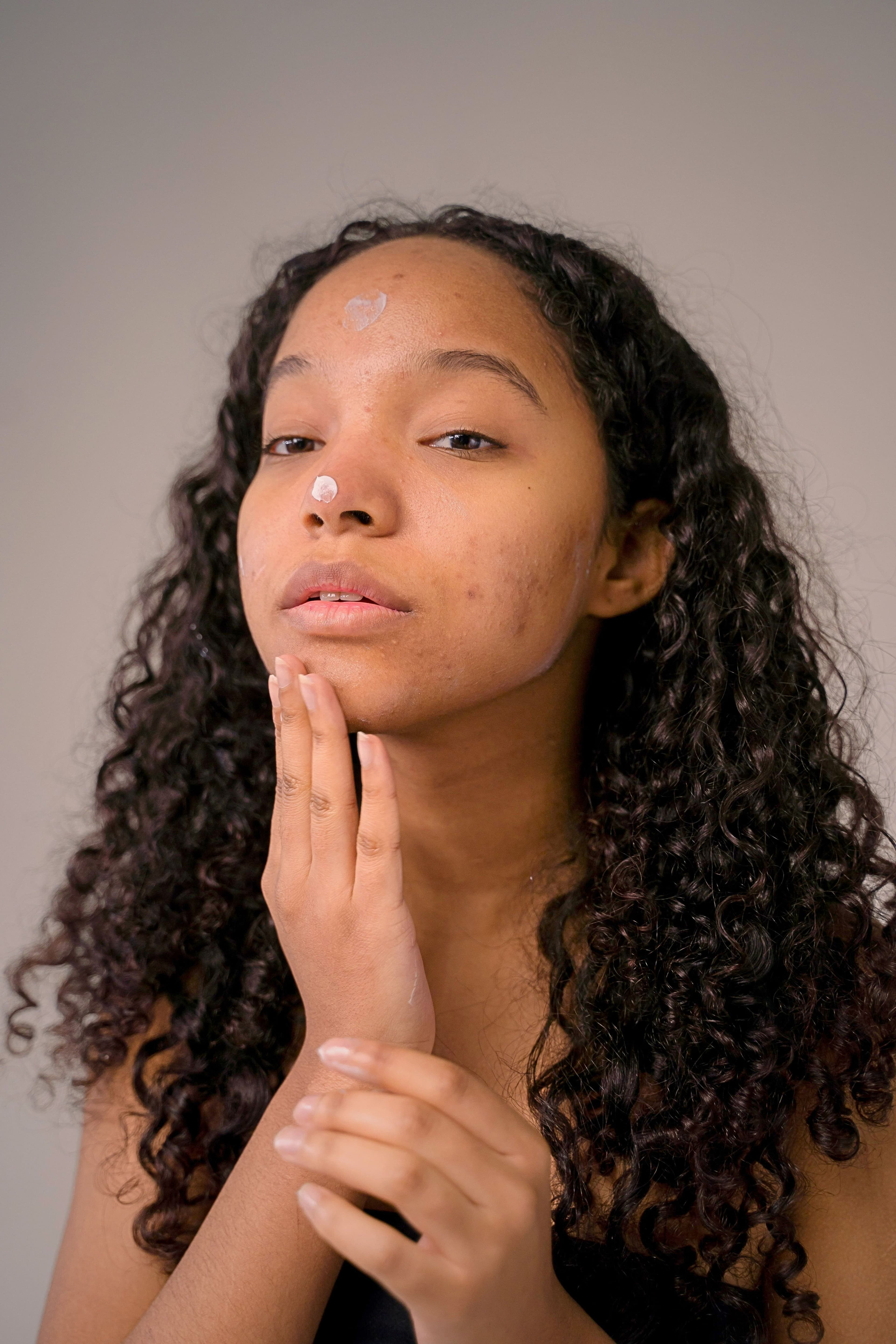
The breakout is gone, but it left something behind.
Maybe it’s a flat brown spot that seems determined to stick around. Maybe it’s pink, red, purple, or gray. Or perhaps the color isn’t really the issue at all. The skin itself looks different now, with a small indentation or raised area where the blemish used to be.
We tend to call all of these acne scars, but they aren’t necessarily the same thing.
Some are changes in color that remain after inflammation settles down. Others are true changes in the texture and structure of the skin. The distinction matters because something that helps a lingering dark mark may do very little for an indented scar, and vice versa.
Fortunately, there’s a fairly simple place to start.
Start With One Question: Is It Flat?
Take a look at the area from different angles and in good lighting.
If the skin feels smooth and the main difference is color, you may be looking at a post-inflammatory mark rather than a true acne scar.
If there’s an indentation, pit, depression, or raised area, acne may have changed the structure of the skin itself. That falls more squarely into scar territory.
Think of it as color versus texture.
It isn’t a perfect at-home diagnostic test, but it’s a useful way to understand why the things acne leaves behind can behave so differently.
The Flat Brown Spot: Post-Inflammatory Hyperpigmentation
After acne causes inflammation, the skin can sometimes produce excess pigment in the area as it heals. The result is post-inflammatory hyperpigmentation, usually shortened to PIH.
PIH is flat. There’s no missing piece of skin and no extra scar tissue sitting above it. Instead, the affected area simply contains more pigment than the surrounding skin.
Depending on skin tone, PIH may appear tan, brown, dark brown, gray-brown, or even blue-gray. It can happen in anyone, but post-inflammatory hyperpigmentation tends to be more noticeable and persistent in people with medium to deeper skin tones.
The reassuring part is that PIH can fade.
The less reassuring part is that skin pigmentation does not always move quickly. Some marks gradually become less noticeable over months, while deeper or more persistent pigmentation can take considerably longer.
And there’s one habit that can make those marks even more stubborn: unprotected sun exposure. Ultraviolet and visible light can contribute to pigmentation, which is one reason sun protection matters when trying to prevent post-acne marks from becoming darker or hanging around longer.
What About the Red or Pink Marks?
Not every flat mark left after acne is brown.
Some people are left with pink, red, or purplish areas after a blemish heals. These are often referred to as post-inflammatory erythema, or PIE.
Instead of excess melanin being the main issue, these marks are related more closely to changes in the small blood vessels associated with inflammation.
PIH and PIE can also look different depending on skin tone, and the distinction isn't always obvious from appearance alone. In some cases, there may even be both pigmentary and vascular changes in the same area.
The important point is simpler: flat discoloration after acne does not automatically mean permanent scarring.
When Acne Actually Leaves a Scar
A true acne scar involves a change in the structure of the skin.
Acne creates inflammation around the follicle. When that inflammation extends deeper into the skin, the healing process can alter collagen. If the skin doesn't replace enough tissue during healing, a depression can remain. If too much scar tissue develops, the result can instead be raised.
That’s why acne scars don’t all look alike.
Indented Scars
The most common acne scars are atrophic scars, meaning they sit below the surrounding skin.
Dermatologists often describe them as ice pick, boxcar, or rolling scars based on their shape and appearance.
Ice pick scars are narrow and relatively deep. Boxcar scars tend to be broader depressions with more defined edges. Rolling scars can create shallow, wave-like changes in the skin's surface.
You certainly don't need to identify your own scar subtype in the mirror, but these categories illustrate why “acne scarring” isn't one single problem.
Different textures can behave differently and may require different approaches.
Raised Scars
Acne can occasionally leave the opposite problem: too much scar tissue.
A hypertrophic scar is raised but generally remains within the boundaries of the original area of injury. A keloid can grow beyond those boundaries.
Raised scars are particularly important to identify before trying to treat them at home because they behave very differently from flat pigmentation or indented acne scars.
They may also be more common in certain areas, including the chest, shoulders, jawline, and upper back.
Why Does One Pimple Disappear While Another Leaves a Mark?
Two blemishes can look similar on the surface and have completely different endings.
How deeply the inflammation extends into the skin matters. More severe inflammatory acne, particularly deep nodules and cysts, has a greater potential to damage surrounding tissue and leave scarring.
But the type of breakout isn't the only factor.
Genetics, skin tone, the intensity and duration of inflammation, and an individual's healing response can all influence what happens afterward.
Then there’s something we have much more control over: picking and squeezing.
Trying to force a blemish out can increase inflammation and trauma to the surrounding skin. That can increase the likelihood of discoloration and may contribute to scarring.
In other words, the pimple that looks extremely ready for “just a little squeeze” may be better left alone.

Why Dark Marks Can Seem Like They’re Never Going Away
One frustrating thing about post-acne discoloration is that new acne can create new marks before the old ones have had time to fade.
Imagine a mark takes several months to become noticeably lighter, but another breakout appears every few weeks. Even though individual spots may be improving, there is constantly a new generation of discoloration taking their place.
It can look as though nothing is changing.
This is why managing the acne itself is such an important part of dealing with what acne leaves behind. Preventing new inflammatory breakouts can mean preventing new dark marks and reducing the opportunity for additional scars to develop.
Can You Treat a Dark Mark the Same Way as a Scar?
Not necessarily, and this is where the distinction between color and texture becomes particularly useful.
Treatments aimed at discoloration generally focus on improving uneven pigmentation, while true textural scars may require a different approach.
A topical product may help improve discoloration surrounding a scar or support a more even-looking skin tone, but it generally cannot correct a deep indentation or raised area caused by changes in the skin’s structure.
Depending on the type of scar, dermatologists may consider procedures such as microneedling, laser treatments, chemical peels, fillers, or other techniques.
This is exactly why a product labeled for “acne scars” can be confusing. Post-acne discoloration, an indented scar, and a raised scar may all appear after acne, but they are not interchangeable skin concerns.
Sunscreen Deserves More Credit Here
Sunscreen doesn't erase an acne scar, but it can still be an important part of managing what acne leaves behind.
Sun exposure can make post-inflammatory pigmentation more noticeable and can interfere with efforts to even the appearance of skin tone. Protecting the skin from UV exposure is therefore especially useful when discoloration is part of the problem.
For people prone to PIH, this isn't just about preventing a sunburn. It's part of protecting the progress the skin is already trying to make.
The Best Time to Think About Acne Scars Is Before They Form
Once acne has changed the structure of the skin, improving the resulting scar can take time and may require procedures.
Preventing scars in the first place is usually much easier.
That means treating persistent inflammatory acne rather than waiting indefinitely for it to resolve on its own, avoiding picking and squeezing, and paying attention when breakouts are becoming deeper, more painful, or more frequent.
Someone who develops dark marks after nearly every blemish may also benefit from addressing the acne before months' worth of discoloration accumulate.
The goal isn't only clearer skin today. It's reducing what each breakout leaves behind tomorrow.
When It Makes Sense to See a Dermatologist
If you're not sure whether you're looking at pigmentation, redness, true scarring, or a combination of all three, a dermatologist can help distinguish between them.
That distinction becomes particularly useful when over-the-counter products aren't producing the change you expected. The issue may not necessarily be that you haven't found the right product yet. You may be trying to treat texture as though it were pigmentation, or pigmentation as though it were a scar.
It is also worth seeking professional guidance when acne is continuing to produce deep, painful breakouts or new scars. Treating the active acne can be just as important as deciding what to do about the marks already there.
How Telederm Can Help
Through Telederm, a board-certified dermatologist can review photos of your skin along with your acne history, previous treatments, and the changes you've noticed after breakouts.
Your dermatologist can help determine whether the areas you're concerned about appear more consistent with post-inflammatory discoloration, active acne, true acne scarring, or a combination of concerns. When treatment is appropriate, they can discuss options based on what is actually
happening with your skin.
What acne leaves behind isn't always a scar, and knowing the difference can change how you approach it. Whether you're dealing with lingering discoloration, changes in texture, or a little of both, identifying what's actually happening is the first step toward choosing an approach that makes sense for your skin.
Telederm Clinical Team, MD | RPh | PharmD | FAAD
Dermatology & Clinical Content Team · Telederm.me
A board-certified dermatologist can treat your acne — start today.
$45 per medical visit: a board-certified dermatologist reviews your skin and builds a custom prescription plan.
Keep reading.
All in Acne →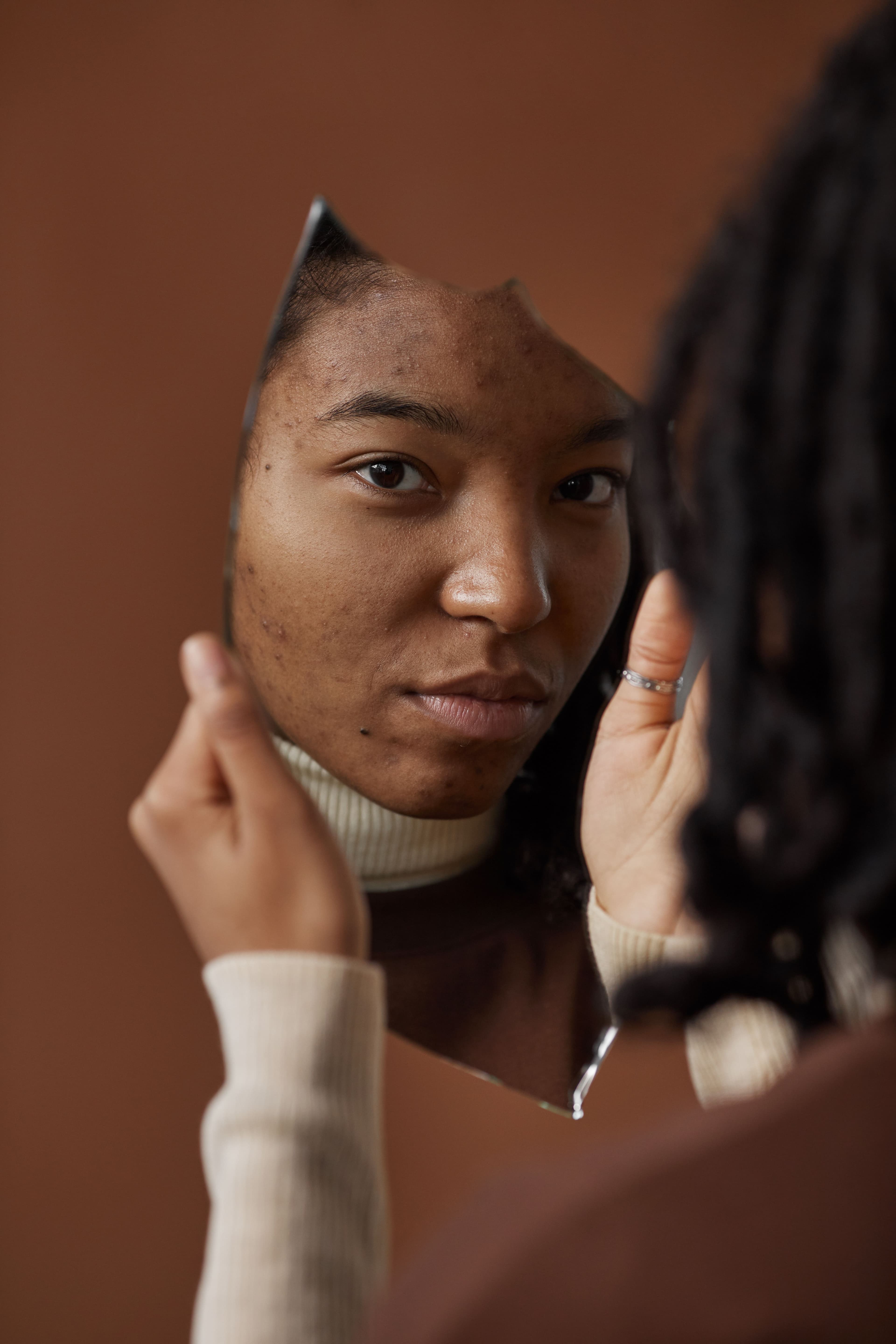
Skin Purging vs Breakout: How to Tell the Difference
This article examines the differences between skin purging and acne breakouts, including commonly associated ingredients, expected symptom patterns, and factors dermatologists often consider during evaluation.
Telederm Clinical Team · Aug 6, 2026
Rosacea vs Acne: How Can You Tell the Difference?
Redness. Bumps. Sensitive skin. Breakouts that don't seem to go away. If you've been trying to figure out whether you're dealing with acne, rosacea, or...
Telederm Clinical Team · Aug 4, 2026
Melasma and Pregnancy: Understanding the Link
Pregnancy can bring many changes to the skin, including melasma. Learn why this common form of hyperpigmentation may become more noticeable during pregnancy and what factors can influence it.
Telederm Clinical Team · Aug 10, 2026
Myth #2: Dark Circles Mean You Need More Sleep
A good night’s sleep doesn’t always make dark circles disappear. From genetics and pigmentation to allergies and natural shadows, there may be more happening beneath your eyes than simply being tired.
Telederm Clinical Team · Sep 9, 2026