
When It’s Not Acne: Understanding Rosacea
Rosacea and acne can look surprisingly similar, but treating the wrong condition can mean months or even years of frustration. Learn what sets rosacea apart, why it’s often mistaken for other skin conditions, and how the right diagnosis can change the treatment approach.
 Medically reviewed byKnox Beasley, MD, FAADDermatologist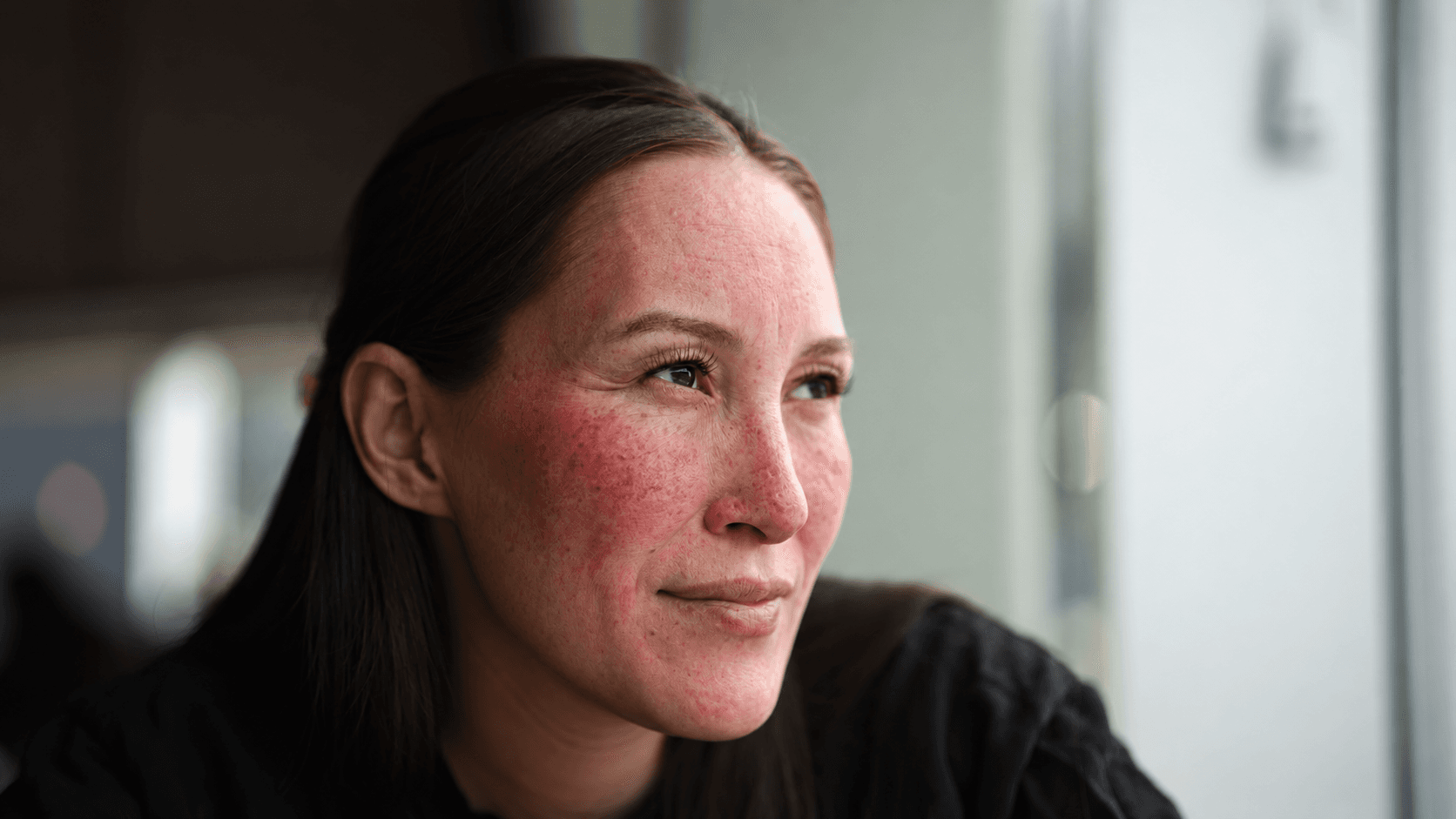
Before you spend another dollar on a skincare product, another month on an antibiotic, or another year wondering why nothing is working, it's worth asking one question first: what if the diagnosis was wrong all along?
That might sound unlikely, but in dermatology, it happens more than most people realize. Rosacea is a chronic skin condition that can sometimes be mistaken for acne and other conditions with similar-looking symptoms.
"I Had Acne for Years — Except I Never Had Acne"
One of our patients, a woman in her late thirties, came to Telederm after more than a decade of being told she had acne.
She'd been through the cycle so many people with persistent skin concerns know well: topical retinoids, antibiotics, benzoyl peroxide, and one prescription acne treatment after another. Some seemed to work for a while, then quietly stopped working.
Nothing ever fully cleared. Looking back, her breakouts never really looked like typical acne. They were concentrated around her nose, cheeks, and chin. They flushed. They burned. They got worse in the heat and after a glass of wine. But because they showed up as bumps and redness, everyone kept treating them as acne.
When her case was reviewed by a dermatologist at Telederm, something stood out right away. The pattern wasn't quite right for acne. The distribution, the flushing, the sensitivity, the specific triggers she described — it all pointed to rosacea. Not a textbook case, but rosacea all the same.
She was prescribed a personalized compounded topical formula aimed at the inflammatory and vascular drivers of rosacea, rather than continuing with treatments directed primarily at acne. Within weeks, her skin started responding in a way it never had before.
She'd been living with rosacea for over a decade. She just didn't know it yet.
Why Rosacea Gets Misdiagnosed So Often
Rosacea is one of the most commonly misdiagnosed skin conditions, largely because in its early or atypical presentations, it can look a lot like several other conditions:
Acne vulgaris: The most common mix-up. Both conditions can cause redness, bumps, and papules on the face. The differences — flushing, burning, no true comedones, and specific triggers — are easy to miss on a quick visual exam.
Perioral dermatitis: A rash of small red bumps around the mouth, nose, and sometimes the eyes. It can resemble rosacea, and the two conditions may even occur together. Topical steroid creams can trigger or worsen perioral dermatitis, and certain cosmetic or skincare products may aggravate the condition.
Seborrheic dermatitis: Causes redness, scaling, and irritation, especially around the nose, eyebrows, and scalp. Without obvious scaling, it can pass for rosacea redness.
Contact dermatitis: An inflammatory reaction to an allergen or irritant. The redness and sensitivity can mimic rosacea, especially when the trigger turns out to be a skincare product used daily.
Lupus (malar rash): The butterfly-shaped rash across the cheeks and nose seen in systemic lupus erythematosus can look similar to rosacea flushing. Telling the two apart usually requires a clinical evaluation, and sometimes lab work.
Eczema (atopic dermatitis): When eczema shows up on the face, it can cause redness, sensitivity, and a compromised skin barrier that mirrors rosacea. The two conditions can also occur at the same time.
Psoriasis: Facial psoriasis can appear as red, inflamed patches easily mistaken for rosacea, particularly when there's little scaling.
Fungal infections: Certain superficial fungal conditions on the face can cause redness and irritation resembling rosacea, especially in people who've been on antibiotics for a long stretch.
What Sets Rosacea Apart
Rosacea can cause acne-like bumps, but there are several clues that may help distinguish the two conditions.
Unlike acne, rosacea generally does not cause comedones, the blackheads and whiteheads created by clogged pores. Instead, patients may experience persistent redness across the central face, flushing, visible blood vessels, and red or pus-filled bumps. Burning, stinging, and increased skin sensitivity can also occur.
Patterns matter as well. Rosacea often affects the cheeks, nose, chin, and central forehead, and symptoms may flare in response to triggers such as heat, sunlight, alcohol, spicy foods, exercise, or stress.
No single feature confirms rosacea on its own. Dermatologists consider the combination of symptoms, their distribution, the patient's history, and how the condition behaves over time.
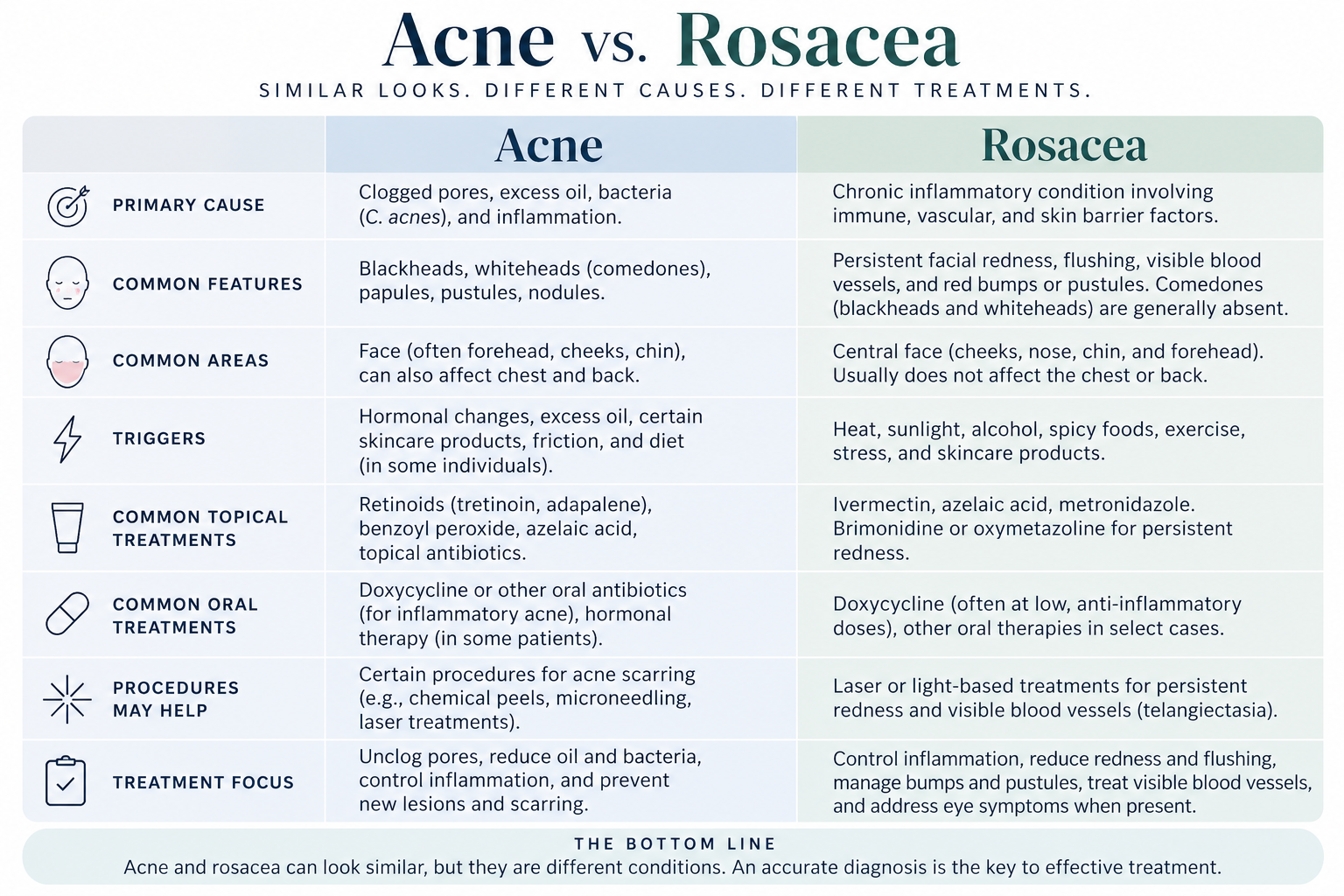
Acne and Rosacea May Look Similar, But Treatment Can Be Very Different
When acne and rosacea both cause red bumps and pustules, it is easy to see why they can be confused. But once a dermatologist looks at the full picture, the treatment plans can begin to look quite different.
Acne treatment often focuses on clogged pores, excess oil, inflammation, and the bacteria involved in acne. Depending on the type and severity of acne, treatment may include topical retinoids such as tretinoin or adapalene, benzoyl peroxide, azelaic acid, topical antibiotics, or combinations of these medications. For more widespread or inflammatory acne, an oral antibiotic such as doxycycline may sometimes be added.
Treatment is also chosen based on the type of acne present. For example, a patient with mostly blackheads and whiteheads may need a different approach than someone experiencing deeper, painful inflammatory lesions.
Rosacea treatment has a different focus. Dermatologists look at which rosacea features are most prominent, such as persistent redness, flushing, visible blood vessels, inflammatory bumps and pustules, or eye symptoms.
For the bumps and pustules associated with rosacea, topical medications such as ivermectin, azelaic acid, or metronidazole may be considered. Oral doxycycline is also used in certain patients, particularly when inflammatory lesions are more significant.
Compounding can also allow a dermatologist to combine compatible ingredients into a single customized topical medication. For example, ivermectin, azelaic acid, and metronidazole may be incorporated into one formulation, allowing multiple therapeutic approaches to be used while reducing the number of separate products a patient has to apply.
These ingredients approach rosacea in somewhat different ways. Ivermectin has antiparasitic activity against Demodex mites along with anti-inflammatory effects, while azelaic acid has anti-inflammatory and antimicrobial properties and can also help address uneven pigmentation. Metronidazole provides additional anti-inflammatory and antimicrobial activity. By combining compatible ingredients when appropriate, a dermatologist can target several aspects of rosacea while keeping the treatment routine more streamlined.
Persistent facial redness may require a different strategy. Prescription medications such as brimonidine or oxymetazoline can temporarily reduce redness by affecting superficial blood vessels in the skin. Visible blood vessels and persistent redness may also be treated with certain laser or light-based procedures.
This is why identifying the condition correctly matters. Two patients may both have red, bumpy cheeks, but the reason those bumps are developing may not be the same, and neither should automatically receive the same treatment.
Finding the Right Approach
There is some overlap between acne and rosacea treatments, which can make the distinction seem even more confusing.
Azelaic acid, for example, can be used in both acne and rosacea. Doxycycline may also be prescribed for either condition. But the reason a dermatologist selects a medication, the dose or formulation used, and what other treatments accompany it can differ depending on what is being treated.
Other medications highlight the differences more clearly. Topical retinoids are a cornerstone of acne treatment because they help prevent clogged pores and treat comedonal acne. By comparison, a patient whose primary rosacea concern is persistent facial redness may be treated with an entirely different class of medication designed to temporarily reduce that redness.
So seeing the name of the same medication on two prescriptions doesn't necessarily mean the underlying conditions are the same. Dermatology treatment is based on the diagnosis, the features present, their severity, and the individual patient.
Why Some "Acne Treatments" Can Be Difficult for Rosacea-Prone Skin
Rosacea-prone skin can also be sensitive. Products or treatment routines that are too irritating may worsen burning, stinging, dryness, or the appearance of redness in some patients.
That does not mean common acne ingredients are universally inappropriate for people with rosacea. In fact, some treatments overlap, and some patients have both acne and rosacea. Instead, it highlights why repeatedly adding stronger acne products without understanding the underlying condition may not solve the problem.
A dermatologist can evaluate whether the bumps are acne, rosacea, another condition, or a combination of more than one problem before deciding which medications and skincare products make sense.
The Right Diagnosis Changes Everything
When rosacea is mistaken for acne, treatment may focus on acne-specific concerns such as clogged pores and comedones. When it is mistaken for eczema or dermatitis, treatments such as topical corticosteroids may temporarily reduce inflammation but can worsen rosacea with prolonged or inappropriate use.
Getting the diagnosis right does more than determine which medication to prescribe. It helps guide the entire treatment approach, from selecting appropriate ingredients and skincare products to identifying potential triggers and managing symptoms over time.
At Telederm, every visit is reviewed by a board-certified dermatologist who considers your symptoms, photos, medical history, previous treatments, and the pattern of your skin concerns. Rosacea does not always have a textbook appearance, which is why looking at the full clinical picture matters.
Already know you have rosacea?
Explore common and less obvious triggers that may contribute to rosacea flare-ups.
This article is for informational purposes only and does not constitute medical advice. Individual results vary. Treatment decisions should be made in consultation with a licensed healthcare provider. Compounded medications are not FDA-approved.
Knox Beasley, MD, FAAD
Dermatologist · Tulane University School of Medicine
Acne, Rosacea, Scalp conditions
A board-certified dermatologist can treat your rosacea — start today.
$45 per medical visit: a board-certified dermatologist reviews your skin and builds a custom prescription plan.
Keep reading.
All in Rosacea →
Rosacea vs Acne: How Can You Tell the Difference?
Redness. Bumps. Sensitive skin. Breakouts that don't seem to go away. If you've been trying to figure out whether you're dealing with acne, rosacea, or...
 Telederm Clinical Team · Aug 4, 2026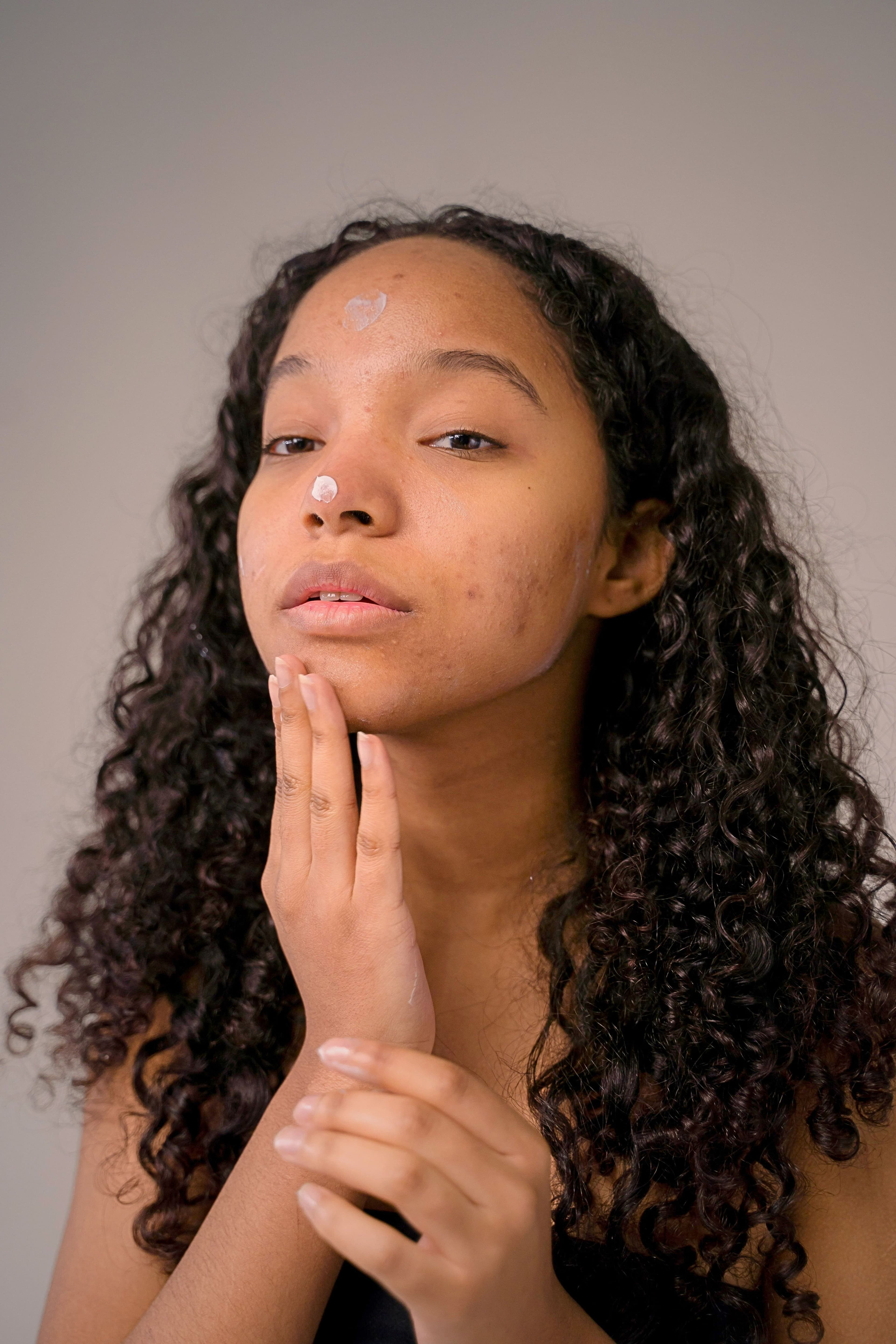
When Acne Leaves a Mark: Scarring vs. Discoloration
A breakout can leave behind more than one kind of reminder. Some spots are changes in color, while others involve the texture of the skin itself. Understanding the difference can help make sense of what you’re seeing after acne clears.
Telederm Clinical Team · Sep 22, 2026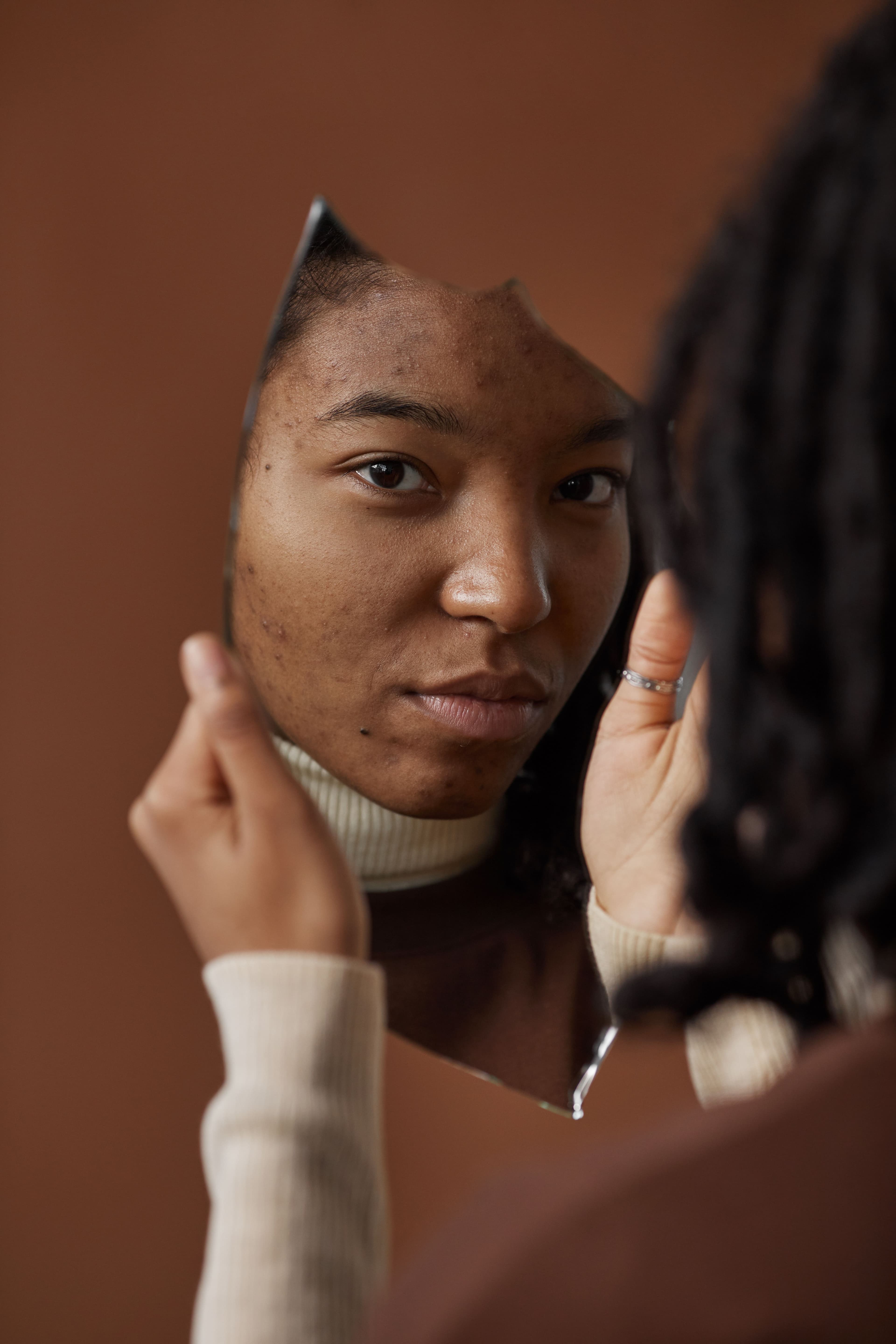
Skin Purging vs Breakout: How to Tell the Difference
This article examines the differences between skin purging and acne breakouts, including commonly associated ingredients, expected symptom patterns, and factors dermatologists often consider during evaluation.
Telederm Clinical Team · Aug 6, 2026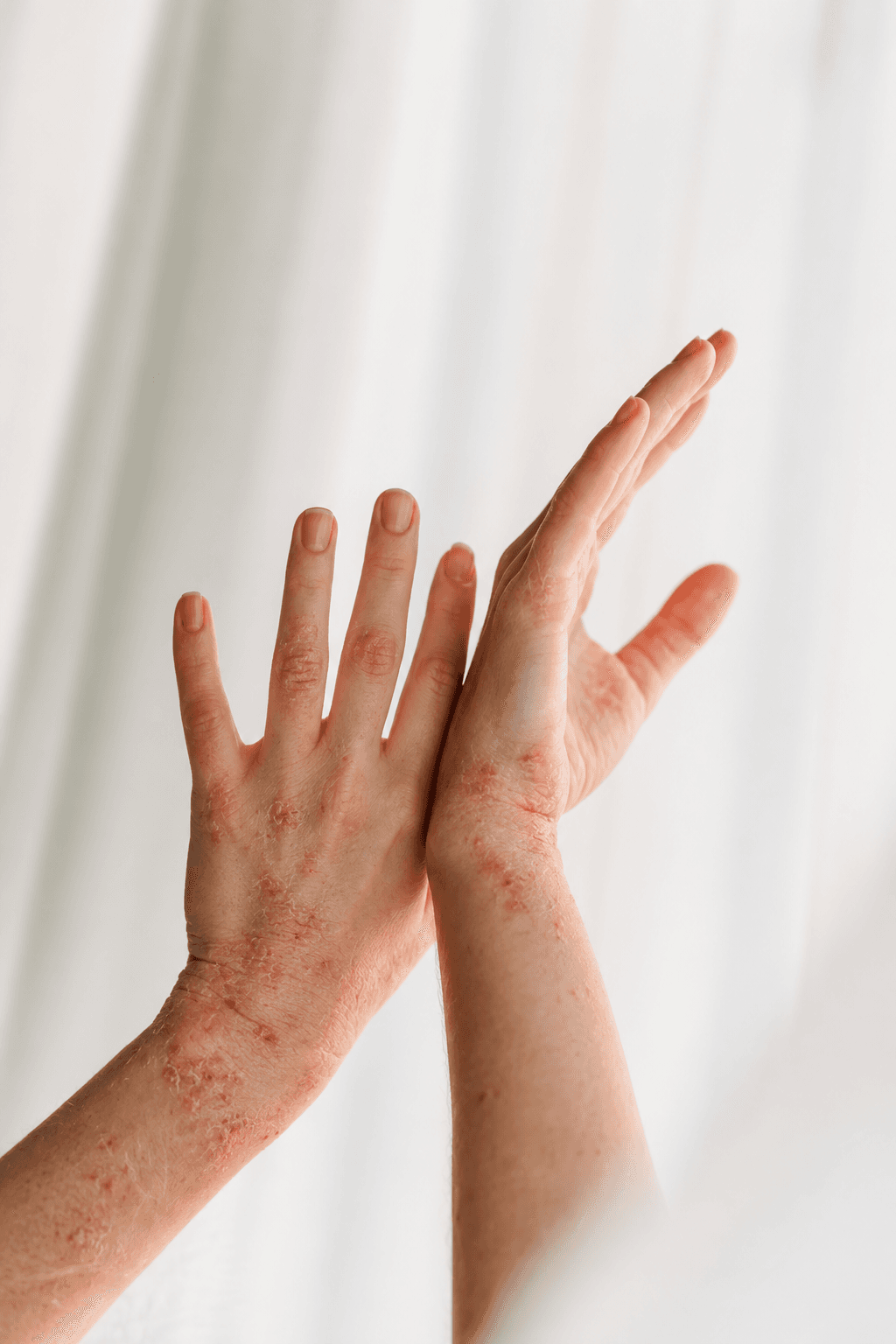
Understanding the Eczema Cycle
Eczema doesn’t always follow a straight path. A flare may improve or even clear with treatment, only to return later. Understanding the cycle from triggers and treatment to clearer skin and maintenance can make eczema easier to manage over time.
Telederm Clinical Team · Sep 21, 2026