
Myth #5: Do DIY Acne Treatments Actually Work?
Toothpaste on pimples, lemon juice for breakouts, honey masks, and even diaper rash cream. The internet has no shortage of DIY acne remedies, but how many actually work? We separate the science from the skincare myths.
 Written byTelederm Clinical Team, MD | RPh | PharmD | FAAD: Madison M.Dermatology & Clinical Content Team
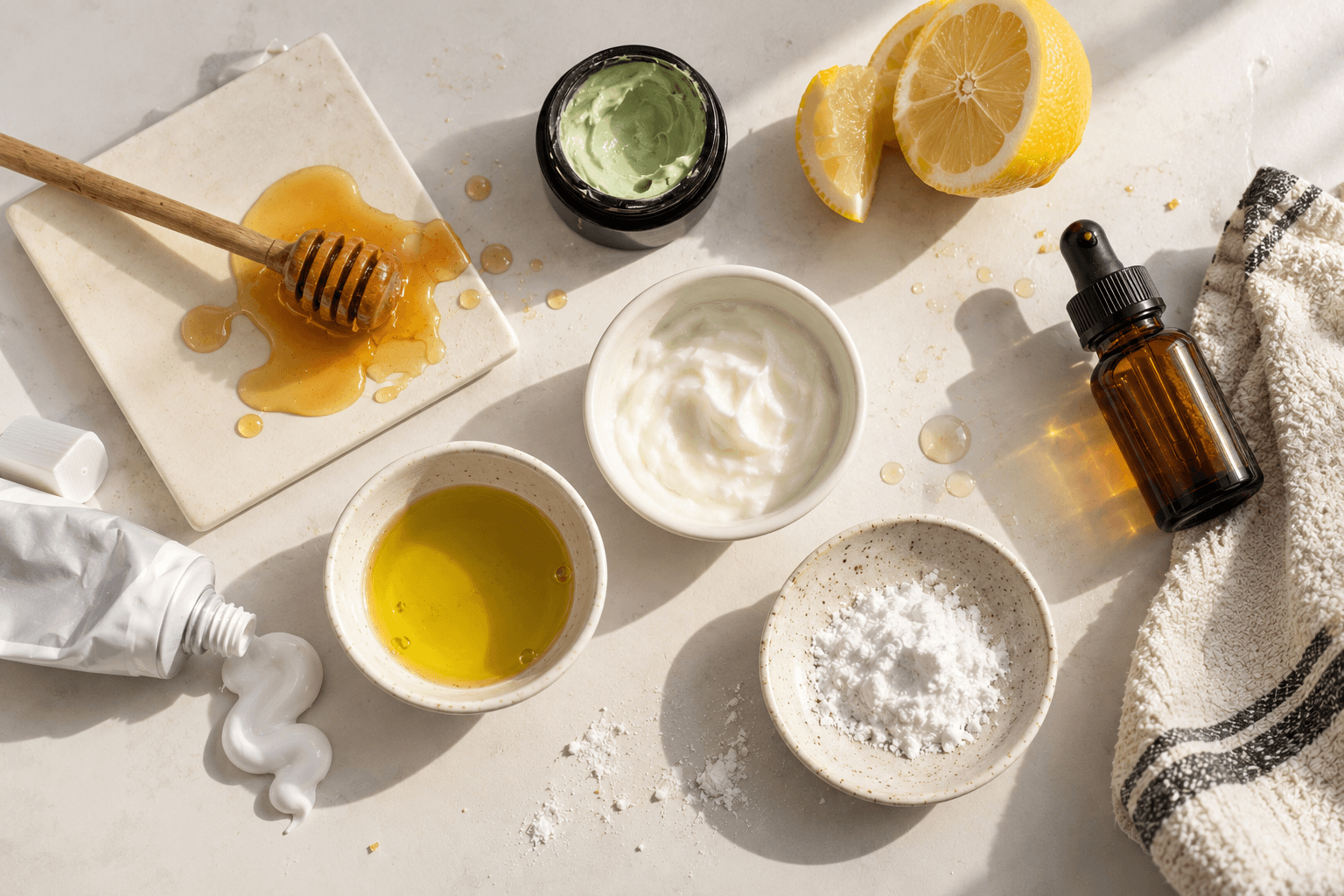
At some point, the internet decided that nearly everything in your kitchen deserved a place in your skincare routine.
Toothpaste on pimples. Lemon juice for breakouts. Honey as a face mask. And apparently, diaper rash cream has joined the conversation, too.
Some of these remedies have been around for generations. Others have found new life on social media, complete with impressive before-and-after photos and enthusiastic testimonials.
But an ingredient having antibacterial, soothing, or drying properties doesn't automatically make it an effective acne treatment.
So, which of these DIY favorites have any science behind them?
Toothpaste: A Classic That Needs to Retire
The idea is simple: toothpaste dries out a pimple, so the pimple disappears faster.
Except drying out your skin and treating acne aren't the same thing.
Toothpaste contains ingredients designed for cleaning teeth, not treating facial skin. Applying it to a breakout can cause irritation, redness, and dryness without addressing the underlying causes of acne.
The verdict: Keep it on your toothbrush.
Lemon Juice and Baking Soda: Your Skin Isn't a Science Experiment
Lemon juice is often recommended for acne because it's acidic. Baking soda, meanwhile, is alkaline and frequently promoted as an exfoliating treatment.
Neither is a reliable acne solution.
Applying lemon juice directly to the face can cause irritation. Certain citrus compounds can also react with sunlight, producing a skin reaction called phytophotodermatitis, which may cause blistering and lingering discoloration.
Because baking soda is alkaline, applying it to facial skin may interfere with its naturally acidic environment and contribute to irritation. That doesn't make it an effective acne treatment.
The verdict: Being able to alter your skin's pH doesn't mean you're improving your acne.
Honey: Sweet, but Not a Proven Acne Treatment
Honey has antimicrobial properties, which makes its reputation as a skincare remedy understandable.
Certain medical-grade honey preparations are used in wound care. But that doesn't mean ordinary honey from your pantry can clear clogged pores or prevent breakouts.
In fact, a randomized clinical trial investigating medical-grade kānuka honey for acne did not demonstrate a significant improvement in its primary acne-severity outcome compared with the control treatment.
The verdict: Interesting properties, insufficient evidence for treating acne.
Tea Tree Oil: This One Has Some Evidence
Unlike toothpaste, tea tree oil has actually been studied as a potential acne treatment.
Some small clinical studies suggest that appropriately formulated tea tree oil products may help reduce acne symptoms. However, the evidence remains limited, and its effectiveness compared with established acne medications is uncertain.
There's also an important difference between a skincare product formulated with tea tree oil and applying undiluted essential oil directly to your face.
Tea tree oil can cause irritation or allergic skin reactions, particularly when improperly used.
The verdict: Promising enough to study, but not a replacement for proven treatment.
Diaper Rash Cream: Why Is This on People's Faces?
This one sounds particularly strange until you look at the ingredient list.
Many diaper rash creams contain zinc oxide, petrolatum, or both. These ingredients create a protective barrier that helps shield irritated skin and reduce moisture loss.
That's useful for diaper rash, and some people find these formulas soothing on dry or irritated facial skin.
But acne is a different condition.
A thick barrier cream doesn't necessarily address clogged pores, excess sebum, or the inflammatory processes involved in acne. Depending on the formulation and individual skin, it may also feel excessively heavy or contribute to breakouts.
The verdict: Potentially helpful for certain types of skin irritation, but not an established acne treatment.
What About Pimple Patches?
Not every popular skincare trend deserves skepticism.
Hydrocolloid pimple patches can absorb fluid from certain superficial pimples while providing a physical barrier that discourages touching and picking.
They won't prevent new acne from forming or treat every type of breakout, particularly deeper lesions.
Still, they're an example of a product that can serve a practical purpose without promising to cure acne overnight.
What Actually Treats Acne?
Acne involves several processes, including clogged hair follicles, excess sebum, inflammation, and the activity of Cutibacterium acnes bacteria.
That's why treatments with established evidence, such as benzoyl peroxide, salicylic acid, adapalene, and certain prescription medications, are generally more useful than whatever happens to be in the pantry.
Not every breakout requires a prescription, but persistent, painful, or scarring acne deserves professional evaluation.
There's nothing wrong with being curious about unconventional skincare. Just remember that a viral testimonial isn't the same thing as clinical evidence.
And sometimes, the best thing you can do for your skin is leave the kitchen ingredients in the kitchen.
Telederm Clinical Team, MD | RPh | PharmD | FAAD
Dermatology & Clinical Content Team · Telederm.me
Keep reading.
All in Dermatology Myths, Explained →
Myth #3: Oral Medications Work Better Than Topical Medications
A prescription doesn’t have to travel through the entire body to be effective. In dermatology, sometimes the most direct route is exactly where the treatment needs to be.
Telederm Clinical Team · Sep 30, 2026
Myth #4: Pores Can Open and Close
Pores can look more noticeable for plenty of reasons. This post breaks down the myth and explains what actually changes the way they look.
Telederm Clinical Team · Sep 21, 2026
Myth #2: Dark Circles Mean You Need More Sleep
A good night’s sleep doesn’t always make dark circles disappear. From genetics and pigmentation to allergies and natural shadows, there may be more happening beneath your eyes than simply being tired.
Telederm Clinical Team · Sep 9, 2026
Myth #1: Oily Skin Doesn't Need Moisture
If your skin already feels oily, adding moisturizer might sound like the last thing you need. But oil and moisture tell two different stories.
Telederm Clinical Team · Aug 24, 2026